


Yes, mobile car detailing can often be estimated from photos—but a photo-based quote is generally preliminary unless Nathan’s expressly confirms it as final. Good photos can show vehicle size, visible dirt, pet hair, stains, cargo condition, exterior contamination and the main areas needing attention. They cannot reliably show every hidden condition, such as contamination beneath mats, deeply embedded hair, odor sources, moisture, fragile materials, previous repairs or paint defects concealed by dirt. When we arrive, the vehicle walk-around lets us compare the actual condition with the information provided during booking and confirm whether the original scope still fits.
Can Nathan’s quote mobile detailing from vehicle photos?
Photos can help us estimate the work remotely, but they do not automatically replace a vehicle-specific inspection.
Our current terms and conditions state that quotes provided through the website, telephone, email, text message or photographs are preliminary unless expressly identified as final.
That distinction matters because a photo can show a lot about a vehicle—but not everything that determines the final amount of work.
What can a detailer learn from photos before arriving?
Vehicle configuration
Photos can help confirm whether the vehicle is a sedan, crossover, SUV, truck, minivan or another configuration with different amounts of interior and exterior area.
Visible condition
Wide photographs can show debris, pet hair, stains, dirty floor areas, cargo contamination and general exterior condition.
Priority areas
Close photos can show the exact seat, carpet, stain, paint area or cargo surface that matters most to the customer.
What photos are most useful for an interior-detailing estimate?
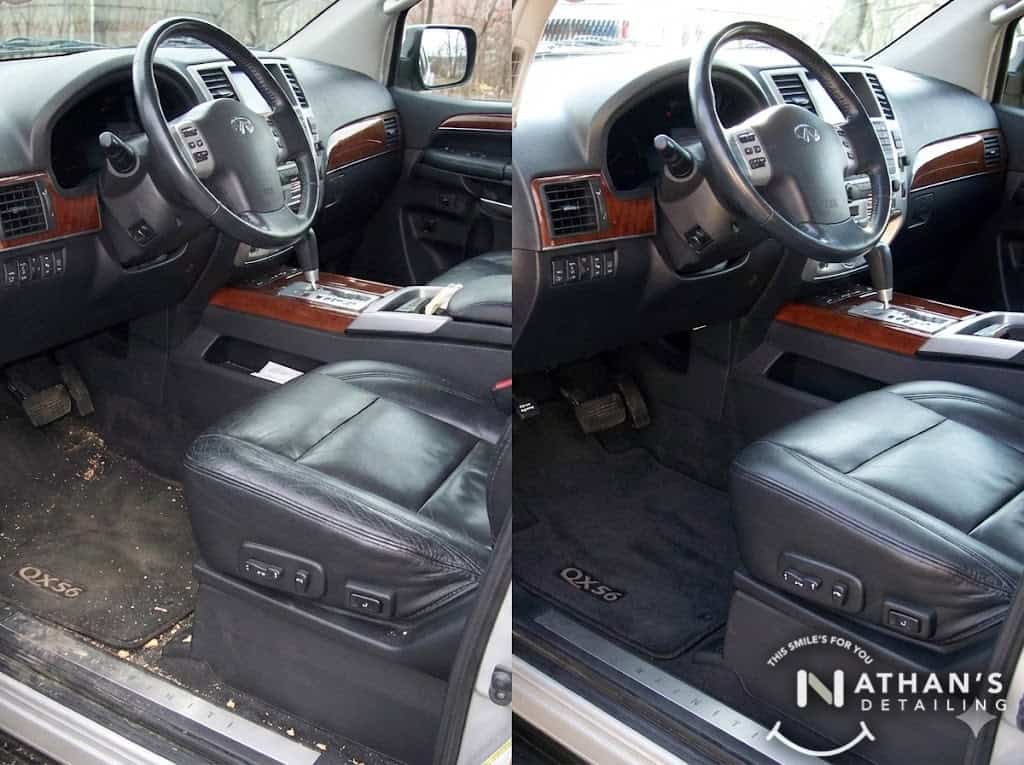
The most useful photo set shows both the overall interior and the specific problem areas.
A customer does not need professional photography. We mainly need enough context to understand where the condition is and how much of the vehicle it affects.


Should you send wide photos or close-up photos?
Ideally, both.
A close-up without context can make it difficult to tell where the condition is or how large the affected area is.
A wide photograph can show location and scale but may hide the severity of a small stain or damaged surface.
Show where the problem is
Include enough of the seat, floor, door, cargo area or body panel to establish location and surrounding condition.
Show what the problem is
Move closer for pet hair, staining, salt residue, scratches, tar, paint defects or another specific concern.
What does a useful close-up condition photo look like?

Why close-ups help
Staining, pet hair and embedded debris can look minor from several feet away.
A close image can show texture, distribution and severity more clearly.
It still cannot tell us everything about how the material will respond once cleaning begins.
Which interior photos should you send?
For a useful remote estimate, consider photographing the areas that actually apply to your vehicle.
- Front driver’s seat and footwell
- Front passenger seat and floor
- Rear seating area
- Third-row seating if present
- Cargo or trunk area
- Floor mats if heavily soiled
- Pet-hair areas
- Individual stains or spills
- Heavy sand or winter-salt accumulation
- Any damaged, fragile or unusual interior material

What exterior photos help with a mobile detailing estimate?
Exterior photographs should show the vehicle as a whole before focusing on isolated paint concerns.
Useful views can include:
- Front three-quarter view
- Rear three-quarter view
- Driver side
- Passenger side
- Wheels when heavily contaminated
- Front bumper when bug buildup is heavy
- Lower panels when road film, salt or tar is significant
- Close photographs of scratches or paint concerns
- Visible PPF, wrap or specialty finish areas when relevant
Can photos show whether the vehicle needs polishing?
They can help, but they may not be enough to confirm the final paint process.
Certain defects become visible only under particular lighting angles or after the paint has been properly cleaned.
Dirt, wax, oxidation or contamination can conceal:
- Swirl marks
- Fine scratches
- Etching
- Previous repair differences
- Failing clear coat
- Paint chips
- Existing machine-polishing defects
Our terms specifically explain that detailing can reveal pre-existing defects that were concealed by dirt, wax, oxidation, staining, debris or previous products.
What conditions are difficult or impossible to judge accurately from photos?
| Condition | Why photographs may be incomplete |
|---|---|
| Odor | A photograph cannot communicate smell or reliably identify where an odor originates. |
| Embedded pet hair | Hair can be trapped below the visible carpet surface even when a photo appears relatively clean. |
| Moisture beneath carpet | Surface appearance may not show wet padding or a leak underneath. |
| Material fragility | A photo may not reveal loose trim, brittle plastic, weak stitching or delaminating material. |
| Paint roughness | Bonded contamination can sometimes be felt more easily than it can be photographed. |
| Previous repair quality | Repainted panels or repaired components may not be obvious remotely. |
| Hidden debris | Material under seats, mats, cargo liners or narrow gaps may not appear in ordinary photographs. |
| Mold / biological condition | A visible patch does not establish the total affected area or whether normal detailing is appropriate. |
Why can the onsite inspection change a photo-based estimate?
Our mobile detailing process guide describes an arrival walk-around before the main work begins.
During that review, we compare the actual vehicle with the information provided during booking.
The technician can inspect:
- Visible contamination
- Vehicle materials
- Existing damage
- Paint condition
- Coatings or protective film
- Interior condition
- Access around the vehicle
- Customer priorities

Photos begin the assessment
The arrival inspection confirms the details that could not be verified remotely.
It may confirm the original estimate exactly—or reveal a condition that requires a different process, more time or a different service.
Can the final price change after a photo estimate?
It can if the actual vehicle condition differs materially from what was visible or disclosed remotely.
Nathan’s current terms identify final-price factors including:
- Vehicle size and configuration
- Existing condition
- Dirt and contamination level
- Staining
- Pet hair
- Sand and salt
- Mold or odor
- Paint condition
- Previous repairs or refinishing
- Accessibility
- Selected upgrades or add-ons
- Labor and material requirements
- Conditions discovered after work begins
How can you make a photo estimate more accurate?
Good photographs work best when paired with accurate written information.
| Send | Why it helps |
|---|---|
| Year, make and model | Helps confirm vehicle configuration and expected size category. |
| Wide exterior photos | Shows the vehicle and overall contamination. |
| Wide cabin photos | Shows how much of the interior is affected. |
| Close-ups of problem areas | Shows stain, pet hair, salt, scratch or contamination severity. |
| Cargo-area photo | Important for SUVs, minivans and pet-carrying vehicles. |
| Description of odors | Photos cannot communicate smell. |
| Known leaks / previous repairs | These conditions may not appear clearly in photos. |
| Existing PPF / coating / wrap | Helps us consider material compatibility before arrival. |
| Parking / service-location information | Helps confirm that mobile service is suitable at the location. |
What if the photos make the vehicle look cleaner than it really is?
That can happen easily.
Lighting, distance and camera processing can hide:
- Fine pet hair
- Glass haze
- Carpet staining
- Small scratches
- Paint swirls
- Salt residue
- Texture differences
- Minor damage
Should you clean the car before taking quote photos?
Usually, no major cleanup is necessary if the purpose of the photos is to show the condition that needs detailing.
Removing personal belongings can make the interior easier to evaluate, but cleaning away the actual contamination defeats the purpose of a condition estimate.
For example:
- Leave pet hair visible.
- Show the real stain.
- Photograph the actual sand or salt condition.
- Show the cargo area before hiding the debris under a liner.
- Do not apply another cleaner or dressing just to improve the photograph.
Can photos help identify the correct package?
Yes, especially when they show whether the problem is interior-only or affects the entire vehicle.
Our current package-inclusions guide separates interior detailing from complete detailing and deeper exterior processes.
| Photos mainly show… | Likely direction to discuss |
|---|---|
| Dirty cabin but acceptable exterior | Interior-focused service |
| Interior and exterior both need attention | Complete detailing |
| Rough / contaminated paint plus complete-detail needs | Decontamination may need to be considered |
| Visible paint defects and gloss concerns | Polishing discussion may be appropriate, subject to physical inspection |
| Heavy pet hair / extra-dirty cabin | Condition adjustment may need to be considered |
Why is the final onsite inspection still important?
Because detailing is performed on physical materials—not photographs.
The technician can see the vehicle from multiple angles, feel certain surfaces, inspect seams and edges, evaluate access and identify conditions that were not visible remotely.
The inspection can also reveal pre-existing damage that dirt had partly hidden.
Onsite inspection = what the physical vehicle actually requires.
Are photographs useful after the detail too?
Yes.
Our post-detail inspection guide recommends clear supporting photographs when a customer sees something they want us to inspect.
A useful post-service concern photo should again show:
- One wider view identifying the location
- One closer view showing the exact concern
- Paint or glass from an angle when reflection makes the issue visible
- The condition before another cleaner or polish is applied

Can mobile car detailing be quoted from photos?
Yes—photos can be very useful for a preliminary estimate.
They work best when they show:
- The whole vehicle
- The overall interior condition
- Rear seating and cargo areas
- The specific affected surfaces
- Heavy pet hair or debris
- Stains
- Exterior contamination
- Visible paint concerns
- Existing specialty surfaces when relevant
But photos cannot reliably reveal every hidden condition.
Nathan’s current terms therefore treat photograph-based quotes as preliminary unless expressly identified as final.
When we arrive, the vehicle walk-around lets us compare the real condition with the booking information, confirm the scope and identify anything that was hidden or difficult to judge remotely.
Want the most useful estimate before your mobile detail?
Send clear wide photos of the vehicle and cabin, then add close-ups of the areas that concern you most. Tell us about anything a camera cannot show well—especially odor, leaks, previous repairs, hidden contamination or unusual materials.
View Current Mobile Detailing OptionsCurrent quote and inspection references
[1] Nathan’s Detailing — Terms and Conditions. Our current terms state that quotes provided through the website, telephone, email, text message or photographs are preliminary unless expressly identified as final. Final price can depend on vehicle size/configuration, existing condition, contamination, pet hair, sand, salt, mold, odor, paint condition, previous repairs, accessibility, selected upgrades and conditions discovered after work begins.
[2] Nathan’s Detailing — What Is Mobile Car Detailing? Our current process guide explains that the technician performs an arrival walk-around to compare the physical vehicle with the booking information. The review checks visible condition, contamination, materials, existing damage, coatings or films and vehicle access.
[3] Nathan’s Detailing — What Does Mobile Car Detailing Include? Our current guide explains why vehicle condition and condition charges should be confirmed before work begins and why the written task list matters more than generic package names.
[4] Nathan’s Detailing — How Can You Tell Whether Mobile Car Detailing Was Done Properly? Our current post-service guide recommends wide and close photographs when documenting a concern and explains why finished work must be judged against the booked scope and starting condition.
A photo-based estimate can be useful, but the physical vehicle, approved scope and any expressly confirmed final quote control.