
Here’s something most matte car owners don’t realize until it’s too late: using the wrong ceramic coating can permanently ruin your finish. I’ve seen it happen more times than I’d like to admit – someone applies a standard gloss coating to their brand-new matte BMW, only to find shiny streaks across the hood that can’t be polished out.
If you own a car with a matte or satin finish, you already know it turns heads. That unique, non-reflective surface sets your vehicle apart from every glossy car on the road. But protecting that finish? That’s where things get tricky.
The good news is that ceramic coating for matte or satin paint is absolutely possible – and it can make your life significantly easier. The catch? You need specialized products and techniques, or you’ll change the very look you paid extra to get.
What Makes Matte and Satin Paint Different From Gloss Paint?
Before we talk about protection, let’s understand what makes your finish special.
Gloss paint has a smooth, mirror-like surface that reflects light uniformly. That’s what creates the shine everyone’s used to seeing. Matte and satin finishes work completely differently. Their surfaces have microscopic textures – think of it like the difference between polished marble and sandpaper – that scatter light in multiple directions instead of reflecting it back.
This texture is what creates that flat, sophisticated appearance. But it’s also what makes these finishes so vulnerable.
Here’s what makes matte paint unique:
- No traditional clear coat like gloss paint has
- Porous surface that absorbs contaminants more easily
- Can’t be polished without changing the texture
- Shows fingerprints and oils dramatically
- Water spots etch in more readily
Satin finishes fall somewhere between matte and gloss – they have a subtle sheen but still rely on that light-scattering texture. Everything that applies to matte applies to satin, just slightly less dramatically.
The real challenge? That porous texture acts like a sponge. Road oils, bird droppings, tree sap, even the oils from your hands – they all penetrate the surface and create stains that you can’t fix with traditional detailing methods.
Can You Safely Ceramic Coat Matte or Satin Paint?
Yes – but only if you use the right products.
Standard ceramic coatings are formulated to enhance gloss and create a glass-like shine. Apply one of those to your matte finish, and you’ll end up with exactly what you didn’t want: unwanted shine and reflectivity that ruins the aesthetic.
Ceramic coating matte finish vehicles requires specialized formulations designed to protect without adding gloss. These products work differently than traditional coatings. Instead of sitting on top of the paint like a glossy shell, they penetrate into the microscopic texture and bond within the surface structure itself.
Let me be straight with you: improper application is a bigger risk with matte paint than with gloss. If you mess up a gloss coating, you can often polish it off and start over. With matte? Polishing changes the texture permanently. You’re stuck with the result.
That’s why many professional detailers – myself included – approach matte ceramic coating with extra caution. Some shops won’t even offer standard warranties on matte work because the substrate is so unforgiving.
At NathansDetailing, we’ve developed specialized protocols specifically for matte and satin finishes. Our technicians undergo dedicated training on matte-specific application techniques, and we only use proven products that preserve your vehicle’s unique flat appearance. We understand that your matte finish represents a significant investment, which is why we approach every application with the precision and care it demands.
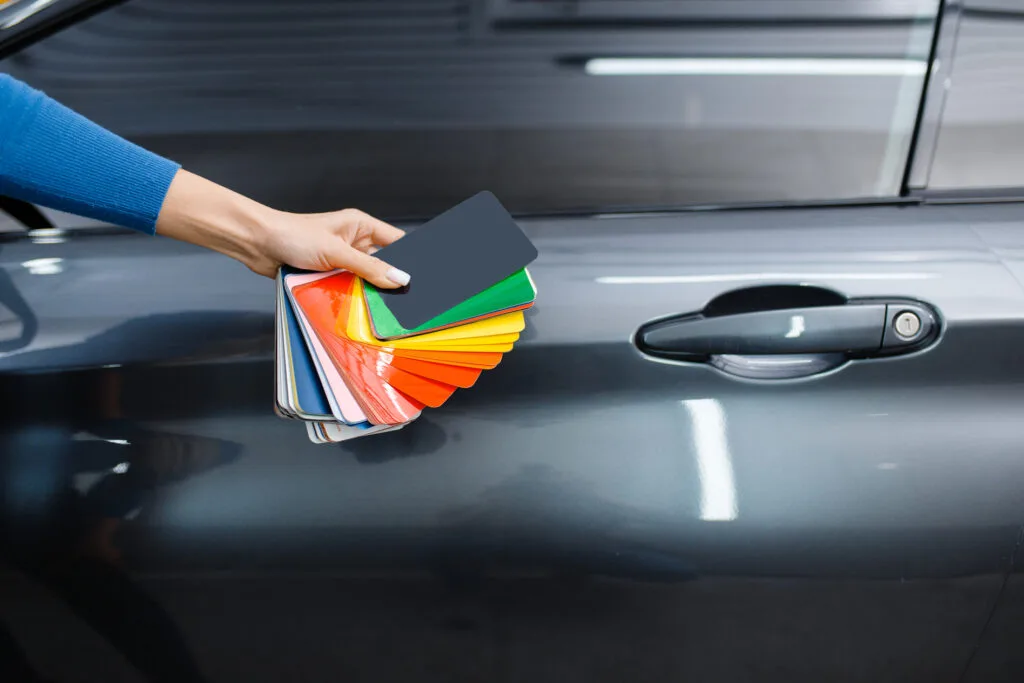
Will Ceramic Coating Change the Look of Matte Paint?
Here’s the honest answer: a slight change is normal, and you should expect it.
Even with matte-specific products, you might notice a subtle deepening of tone or a mild sheen shift. This isn’t a defect – it’s the nature of how coatings interact with textured surfaces. The coating fills in microscopic valleys in the texture, which can ever-so-slightly alter how light scatters across the panel.
Think of it like this: if your matte paint is suede, the coating is like a protective spray that keeps the suede safe but might darken it just a touch.
What you won’t get (with the right product):
- High-gloss conversion
- Mirror-like shine
- Dramatic reflectivity changes
What might happen:
- Slight tone deepening (often perceived as “richer”)
- Minor evenness in appearance
- Subtle sheen in certain lighting angles
The key word here is “subtle.” If someone applies a coating and your matte black suddenly looks semi-gloss, that’s not normal – they used the wrong product.
One challenge specific to matte paint: the texture can absorb coating solvents unevenly, especially around edges, emblems, and body lines. Even with perfect technique, these areas might show minor variations. It’s not an installation defect; it’s a reality of working with non-uniform surfaces.
How Does Ceramic Coating Work on Matte & Satin Surfaces?
Traditional ceramic coatings create a sacrificial layer that enhances gloss. Matte paint protection coatings work on a different principle entirely.
When you apply a matte-specific ceramic coating, it:
- Penetrates the texture rather than sitting on top
- Bonds at the molecular level with the paint surface
- Fills microscopic pores without creating a reflective layer
- Maintains light-scattering properties that preserve the flat look
The result? You get hydrophobic properties – water beads up and rolls off – without the shine. Some owners worry that water beading creates gloss, but that’s a misconception. The beading happens due to surface tension, not reflectivity. Your finish stays flat while still shedding water effectively.
The protective benefits you actually get:
- Chemical resistance: Bird droppings, bug splatter, and tree sap wash off more easily
- UV protection: Reduces oxidation and fading over time
- Stain prevention: Oils and contaminants can’t penetrate the sealed surface
- Easier cleaning: Dirt doesn’t bond as strongly, so washing is gentler on the texture
- Water spot resistance: Minerals are less likely to etch into the surface
What ceramic coating doesn’t provide – and this is critical – is impact resistance or scratch protection. The coating is only 1-2 microns thick (thinner than a human hair). It won’t stop rock chips, key scratches, or parking lot damage. For that level of protection, you’d need to read Corvette C8 PPF vs. Ceramic Coating – Which Gives Better Protection on the Track?
Which Ceramic Coatings Are Best for Matte or Satin Cars?
Not all ceramic coatings are created equal, especially for non-gloss finishes.
You need products specifically labeled for matte or satin applications. Two brands that consistently get positive feedback from professionals:
Dr. Beasley’s Matte Paint Coating: Designed specifically for flat finishes
Gyeon Matte: Formulated to preserve texture while adding protection
These products use different chemical structures than gloss coatings. They’re engineered to provide hydrophobic properties and chemical resistance without creating the glass-like surface layer that adds shine.
When you bring your matte or satin vehicle to NathansDetailing, we evaluate your specific finish and recommend the ideal coating system for your needs. We work with premium matte-specific products and provide detailed consultations to ensure you understand exactly what to expect from the process. Our controlled application environment maintains optimal temperature and humidity levels, eliminating the variables that cause uneven results. Plus, we back our work with comprehensive aftercare guidance to help you maintain that perfect flat finish for years to come.
A few things to know about matte ceramic products:
Durability: Most matte coatings last 2-5 years, depending on environmental exposure and maintenance. That’s comparable to gloss coatings.
Cost: Expect to pay similar prices to gloss ceramic work, though some installers charge more due to the higher risk and specialized expertise required.
Application difficulty: These products are less forgiving during installation. The leveling window (the time you have to wipe off excess) can be shorter, and application pressure matters more.
Layering: Unlike gloss coatings where multiple layers can build depth, stacking matte coatings mainly improves coverage. Don’t expect dramatic differences from How Many Layers of Ceramic Coating Do You Really Need on a matte finish.
One insider tip: some professional-grade matte coatings perform better than consumer products, but they require specific application environments. Temperature, humidity, and panel temperature all affect how the coating flashes and cures on textured surfaces. Professional detailers who are members of the International Detailing Association undergo specialized training in advanced coating techniques and are held to industry standards for quality and professionalism.
Ceramic Coating vs. PPF for Matte Paint: Which Is Better?
This is the question I get asked most often, and the answer depends entirely on what you’re trying to protect against.
Ceramic coating excels at chemical protection and maintenance. It makes washing easier, prevents staining, and adds UV resistance. But it won’t stop rock chips, scratches, or parking lot damage.
Paint Protection Film (PPF) provides physical protection. It absorbs impacts, resists scratches, and some films even have self-healing properties that make minor scratches disappear with heat. Matte PPF exists specifically for non-gloss finishes.
Here’s how they compare:
Feature | Ceramic Coating | Matte PPF |
Chemical resistance | Excellent | Good |
Impact protection | None | Excellent |
Scratch resistance | Minimal | High |
Self-healing | No | Yes (some films) |
Cost (full vehicle) | $800-2,000 | $4,000-8,000 |
Durability | 2-5 years | 5-10 years |
Maintenance ease | High | Moderate |
Installation risk | Moderate | Lower |
At NathansDetailing, we offer both matte ceramic coating and matte PPF installation, which means we can provide unbiased guidance based on your actual protection needs – not just what we prefer to install. Many of our clients opt for our combination approach: matte PPF on high-impact zones with ceramic coating coverage on the remaining panels. This strategy maximizes protection while managing budget effectively. We’ll walk you through all options during your consultation and create a custom protection plan tailored to how you actually use your vehicle.
The smart move? Many owners choose both. You can apply matte PPF to high-impact areas (front bumper, hood, fenders, mirrors) and ceramic coat the rest of the vehicle. Some installers even apply ceramic coating over matte PPF for added chemical protection.
If you’re trying to decide between coverage options, check out Partial vs. Full PPF: What’s Best for Your Budget and Car Type.
One thing to know about matte PPF: film quality varies significantly by brand. Some films darken slightly, others can show patchiness if the installer doesn’t manage product application carefully. The texture of the film interacts with coatings differently than matte paint does.
For specific vehicles, the decision often comes down to use case. Track cars benefit more from PPF’s impact resistance, while daily drivers might prioritize the easier maintenance that ceramic coating provides. If you drive a Tesla, Tesla Matte vs. Gloss PPF: Which Matches Your Style? covers considerations specific to EV ownership.
How Do You Maintain a Matte Car After Coating?
Protected matte finishes are dramatically easier to maintain than unprotected ones – but you still need to follow specific care practices.
The biggest mistake matte owners make? Using products designed for gloss paint. Traditional car wash soaps, waxes, and quick detailers often contain gloss enhancers and polishing agents that will damage your finish over time. Even touchless automatic washes use chemicals that can degrade matte paint.
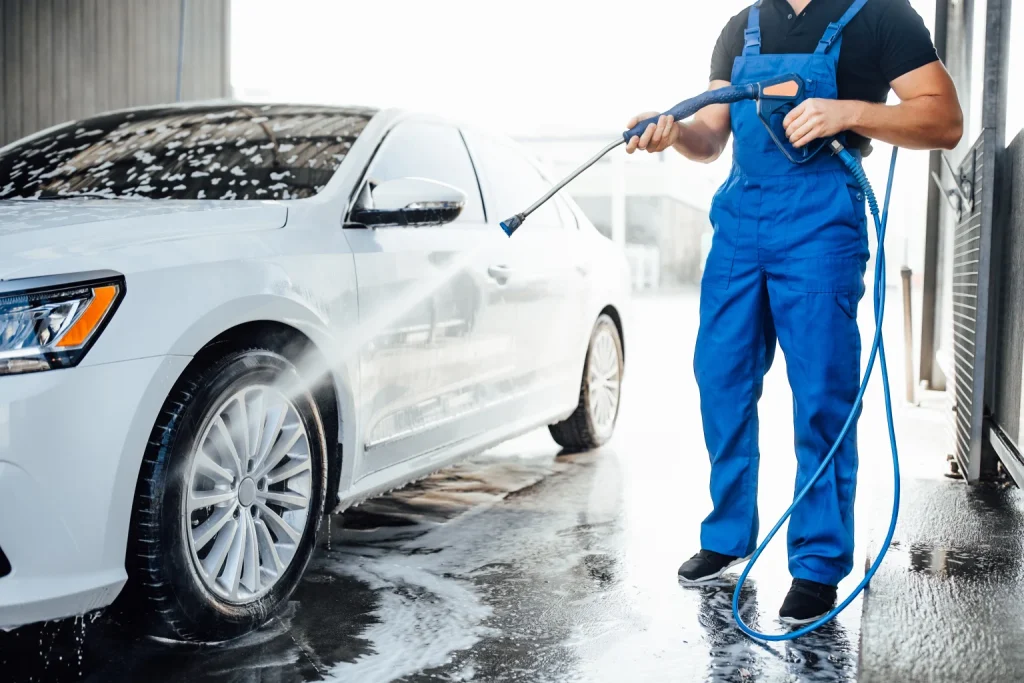
Your wash routine should look like this:
- Rinse thoroughly first Flush dirt from seams, badges, and panel edges before any contact. This prevents grit from scratching during washing.
- Use pH-neutral, matte-specific shampoo Regular car soap contains gloss enhancers. You need products specifically labeled safe for matte finishes.
- Wash with soft, dedicated wash mitts Reserve specific mitts for matte paint only. Don’t use the same mitt you use on gloss cars – residual waxes or glazes will transfer.
- Dry immediately Don’t let water air-dry on matte paint. Even with ceramic coating, minerals in water can etch the surface if they bake in the sun. Use high-pile drying towels and consider forced air (leaf blower) for seams and crevices.
- Decontaminate sparingly Iron removers and tar removers should be matte-safe formulations. Use them only when necessary, and always rinse thoroughly afterward.
- Never use clay bars without professional guidance Clay can burnish matte texture, creating shiny spots. If decontamination is needed beyond chemical methods, consult a professional.
Frequency: Wash every 2-3 weeks during normal conditions, more frequently in winter or if the car gets heavy road grime exposure.
Every matte ceramic coating service at NathansDetailing includes a comprehensive maintenance kit with pH-neutral, matte-safe products and detailed care instructions specific to your coating. We also offer maintenance packages that include periodic inspections and professional decontamination when needed, ensuring your coating performs optimally throughout its lifespan. Our clients appreciate having ongoing support from professionals who understand the unique requirements of protected matte finishes.
One unexpected benefit of ceramic coating on matte paint: the hydrophobic properties mean you’ll use less product and less effort. Contaminants don’t bond to the protected surface as aggressively, so they wash away more easily.
What Mistakes Should You Avoid With Matte Paint Protection?
Let’s be honest – matte paint is unforgiving. Mistakes that would be minor annoyances on gloss paint can be permanent on matte finishes.
Don’t use traditional waxes or sealants These products are designed to add shine. They’ll create uneven gloss patches on your matte finish that you can’t remove without changing the texture.
Don’t attempt to polish matte paint Machine polishing removes material and levels the surface. That process increases gloss and destroys the texture. It’s not a fix – it’s a finish-changer.
Don’t apply gloss ceramic coatings I mentioned this earlier, but it bears repeating: standard ceramic coatings will add unwanted shine. Always verify you’re using a matte-specific product.
Don’t ignore water spots Even with ceramic coating, minerals can etch into matte paint if water bakes in the sun. Dry your car promptly after washing or rain exposure.
Don’t lean on your car wearing rough clothing Denim, jackets with zippers, even some backpacks can burnish the texture, creating shiny patches where the fabric compressed the surface.
Don’t use automated car washes Brush tunnels and high-pressure systems with harsh chemicals will gradually damage matte texture. Hand washing is the only safe option.
Don’t wait too long for the first wash after coating The first two weeks after application are critical. Avoid automatic washes, aggressive chemicals, and letting contaminants sit on the surface. The coating needs time to fully cure.
Here’s a mistake I see frequently: owners apply ceramic coating themselves without controlling the environment. Temperature and humidity matter significantly with matte coatings. Hot panels cause the coating to flash too quickly, making uniform application nearly impossible. High humidity extends the leveling window unpredictably.
If you’re considering DIY application, be realistic about your skill level and environment. Professional installers work in controlled spaces with stable temperatures and humidity specifically because these factors affect outcomes dramatically on textured surfaces.
FAQs
Can you ceramic coat matte paint? Yes, but only with ceramic coatings specifically formulated for matte finishes. Standard gloss coatings will add unwanted shine and alter the flat appearance permanently.
Does ceramic coating change matte finish? A slight tone deepening or minor sheen shift is normal and not considered a defect. Dramatic gloss changes indicate the wrong product was used.
Will ceramic coating make matte paint shiny? Matte-specific ceramic coatings preserve the flat appearance. Traditional gloss coatings will make matte paint shiny, which is why product selection is critical.
How long does ceramic coating last on matte paint? Most matte ceramic coatings last 2-5 years, depending on environmental exposure, maintenance quality, and the specific product used.
Can you polish matte paint if the coating goes wrong? No. Polishing changes matte texture permanently by increasing gloss. This is why proper application is so critical – there’s no easy fix for mistakes.
Should you ceramic coat a satin car? Yes, satin finishes benefit from ceramic coating for the same reasons as matte: improved chemical resistance, easier maintenance, and stain prevention. Use satin-specific or matte-specific products.
What happens if water spots sit on coated matte paint? Mineral deposits can still etch into the surface if they bake in the sun, even with ceramic coating. Dry your vehicle promptly after washing or rain exposure.
Can you apply ceramic coating over matte PPF? Yes, and many owners do this for added chemical protection. The ceramic coating bonds to the film surface and makes maintenance even easier.
Protect Your Matte Finish the Right Way
Matte and satin finishes aren’t just different colors – they’re entirely different surfaces that require specialized care. Ceramic coating for matte cars can dramatically improve your ownership experience by making maintenance easier and protecting against chemical damage, but only if it’s done correctly.
The stakes are higher with matte paint than gloss. There’s no polishing safety net if something goes wrong. But here’s the reassuring part: when you use the right products and techniques, protecting your matte finish is straightforward.
If you’re nervous about DIY application, that’s completely reasonable. The cost of professional installation is modest compared to the risk of permanently altering your finish. And if you’re trying to decide whether ceramic coating or PPF makes more sense for your specific situation, consider your priorities: chemical protection and easy maintenance point toward ceramic, while physical protection from impacts points toward Gloss vs. Satin PPF: Which Finish Suits Your Car’s Look?.
Your matte finish turns heads for a reason. With the right protection and care routine, it’ll keep doing exactly that for years to come.
Found this guide helpful? Explore our other in-depth car protection guides below:
What is Ceramic Coating
Ppf Car vs Ceramic Coating
Ceramic Coating Maintenance Guide for Ohio Weather
Ceramic Coating for Dark vs. Light Cars: Differences & Tips
Is Ceramic Coating Worth It for Used Cars?
Corvette C8 PPF vs. Ceramic Coating
How Many Layers of Ceramic Coating Do You Really Need?
Ceramic Coating: Cleveland Routes Where You Need It