


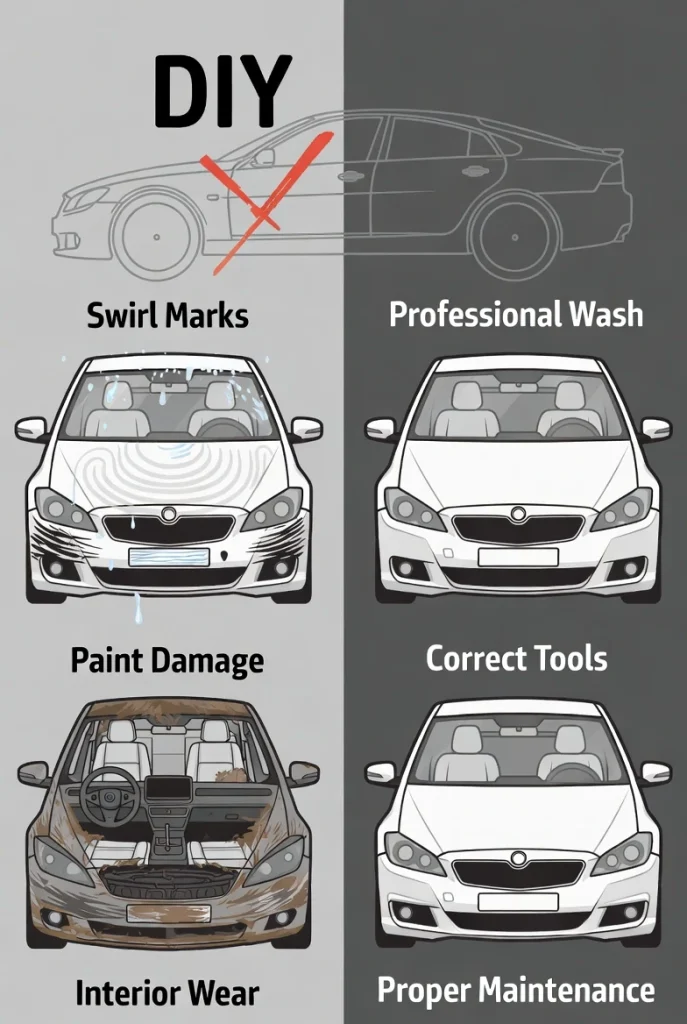
Many car owners unknowingly damage their vehicles while trying to detail at home. These mistakes might cost you more in repairs than a professional service would. While the DIY approach seems cost-effective, improper techniques can lead to swirl marks, paint damage, interior stains, and even costly repairs that far exceed the price of professional detailing.
According to the AutoCare Association, improper DIY detailing contributes to premature paint damage in 30% of cases. From working with thousands of clients, we’ve observed that most car owners make the same preventable mistakes that could easily be avoided with the right knowledge – or by choosing professional detailing services.
Table of Contents
- Why DIY Detailing Goes Wrong
- Mistake #1: Using the Wrong Cleaning Products
- Mistake #2: Washing Under the Sun
- Mistake #3: Improper Drying Techniques
- Mistake #4: Overusing Wax & Polish
- Mistake #5: Ignoring the Car Interior
- Mistake #6: Skipping Protective Coatings
- DIY vs Professional: Which Is Better for Your Car?
- FAQ
Why DIY Detailing Goes Wrong
Most car owners approach detailing with good intentions but lack the specialized knowledge that professional detailers spend years developing. The automotive detailing industry has evolved significantly, with specific products, techniques, and equipment designed for different paint types, interior materials, and protective coatings.
After analyzing detailing case studies, we noticed that the most common issues stem from using incorrect products, poor timing, and lack of proper technique. What seems like a simple car wash can quickly turn into an expensive mistake when you don’t understand how different materials react to various cleaning agents and environmental conditions.

Mistake #1: Using the Wrong Cleaning Products
Household vs Car-Safe Cleaners
One of the most damaging mistakes car owners make is reaching for household cleaners when detailing their vehicles. Dish soap, glass cleaners, and all-purpose cleaners might work wonders in your kitchen, but they can wreak havoc on your car’s surfaces.
Why household cleaners damage your car:
- Dish soap strips away protective wax and can cause paint oxidation
- Window cleaners contain ammonia that damages window tint and rubber seals
- All-purpose cleaners can discolor leather and vinyl interiors
- Bleach-based products permanently stain fabric and carpeting
The professional solution: Car-specific cleaners are pH-balanced and formulated to work safely with automotive materials. They effectively remove dirt without compromising protective coatings or causing surface damage.
Instead of risking damage with household products, professional detailers use specialized cleaners designed for each surface. Consider getting professional results with our vehicle tint & detailing service that uses only premium, car-safe products.
Mistake #2: Improper Drying Techniques
Best Drying Towels to Prevent Scratches
Perhaps the most heartbreaking mistake car owners make is scratching their freshly washed car during the drying process. Using old t-shirts, bath towels, or even some microfiber towels can create micro-scratches that accumulate over time into visible swirl marks.
Common drying mistakes:
- Using dirty or contaminated towels
- Applying too much pressure while drying
- Dragging towels across the surface instead of patting
- Using the same towel for wheels and paint
The right approach: Professional detailers use high-quality, clean microfiber drying towels or chamois specifically designed for automotive use. They work in straight lines, not circles, and frequently flip the towel to use clean sections.
Many car owners don’t realize that proper drying technique is just as important as the washing process itself. One Reddit user shared: “I thought I was being careful, but after two years of DIY detailing, my black car looked like someone took sandpaper to it. The swirl marks were everywhere.”
Mistake #3: Overusing Wax & Polish
When Less Is More
Many car enthusiasts believe that more wax equals more protection and shine. This misconception leads to product buildup, streaking, and actually diminished protection over time.
Signs of wax overuse:
- White residue in crevices and trim
- Streaky, uneven finish
- Difficulty removing product completely
- Attracting more dirt and debris
Polish is another commonly misused product. Car owners often apply polish thinking it’s the same as wax, but polish is designed to remove minor imperfections and should be used sparingly.
From working with thousands of clients, we’ve observed that proper application technique matters more than the amount of product used. A thin, even coat applied correctly will always outperform heavy, uneven application.
Mistake #4: Ignoring the Car Interior
Interior detailing requires different products and techniques than exterior work, yet many car owners treat it as an afterthought. This leads to permanent staining, cracking, and premature wear of interior surfaces.
Common interior mistakes:
- Using exterior products on interior surfaces
- Oversaturating fabric and leather
- Forgetting to protect surfaces before cleaning
- Using incorrect brushes that scratch trim pieces
Different interior materials require specific care:
- Leather needs conditioning, not just cleaning
- Fabric requires proper extraction to prevent mold and odors
- Dashboard materials can crack if cleaned with harsh chemicals
- Electronic components need moisture protection during cleaning
Professional detailers understand these nuances and have the tools to properly clean and protect each interior surface without causing damage.

Mistake #5: Skipping Protective Coatings
The Importance of Paint Protection
Many car owners focus solely on cleaning without considering long-term protection. This oversight leads to faster degradation of paint, interior surfaces, and glass.
Modern protective coatings offer significant benefits:
- Ceramic coatings provide long-lasting paint protection and easier maintenance
- Paint protection film (PPF) shields against rock chips and scratches
- Window tinting protects interior from UV damage while improving comfort
According to professional detailing experts, protective coatings applied correctly can extend your vehicle’s lifespan and maintain its value significantly better than cleaning alone.
The application of these protective products requires specialized knowledge and equipment. Improper installation can void warranties and reduce effectiveness.
DIY vs Professional: Which Is Better for Your Car?
When DIY Makes Sense
DIY detailing can work for:
- Regular maintenance washing between professional services
- Quick touch-ups and spot cleaning
- Car owners with significant time and interest in learning proper techniques
- Vehicles with minimal value where perfection isn’t critical
When Professional Detailing Is Worth It
Professional detailing is the better choice when:
- Your vehicle is new or high-value
- You lack proper tools and workspace
- Time is a limiting factor
- You want guaranteed results without risk of damage
- Protective coating installation is needed
Professional detailers bring years of experience, specialized tools, and comprehensive insurance to protect your investment. The cost of professional service often pays for itself by preventing expensive mistakes and maintaining your vehicle’s value.
Final Thoughts
While DIY car detailing can be rewarding, the risk of costly mistakes often outweighs the potential savings. Professional detailers have the knowledge, tools, and experience to deliver superior results while protecting your vehicle’s value.
Ready to give your car the professional care it deserves? Book your appointment with Nathan’s Detailing today and experience the difference that expert technique and premium products can make. Our comprehensive services include professional-grade cleaning, protection, and window tinting that will keep your vehicle looking its best for years to come.
Frequently Asked Questions
What are the most common mistakes car owners make when detailing at home?
The most common mistakes include using household cleaners on car surfaces, washing in direct sunlight, improper drying techniques that cause scratches, overusing wax and polish, neglecting interior care, and skipping protective coatings. These mistakes can cause permanent damage that’s expensive to repair.
Can DIY detailing damage car paint?
Yes, improper DIY detailing can cause significant paint damage including swirl marks, scratches, etching from water spots, and oxidation from using wrong products. According to industry data, improper DIY techniques contribute to premature paint damage in about 30% of cases.
Is professional detailing worth the cost?
Professional detailing is typically worth the cost when you consider the risk of damage from DIY mistakes, the time investment required to do it properly, and the superior results achieved with professional-grade products and techniques. The cost often pays for itself by maintaining your vehicle’s value and preventing expensive repairs.
What products should I avoid using on my car?
Avoid household cleaners like dish soap, window cleaners with ammonia, all-purpose cleaners, bleach-based products, and abrasive materials like paper towels or old t-shirts. These can damage paint, strip protective coatings, stain interiors, and scratch surfaces.
How often should I detail my car?
Most vehicles benefit from professional detailing every 3-6 months, depending on usage, environmental conditions, and storage. Regular maintenance washing can be done more frequently, but deep cleaning and protective coating maintenance should be handled by professionals to ensure optimal results.
This article was written by automotive detailing experts and reviewed by certified professionals with over 10 years of industry experience. For more information about professional detailing services, visit Nathan’s Detailing.
Found this guide helpful? Explore our other in-depth car protection guides below:
What Is Mobile Car Detailing
How to Detail A car Interior
Car Wash VS Detailing
Car Detailing Myths
Common Detailing Mistakes Car Owners Make at Home
Signs Your Car Needs Professional Detailing
Detailing for Classic Cars — Special Considerations & Tips
Top 5 Questions Car Owners Ask Before Scheduling Detailing
How to Spot a Quality Detailing Service Before Booking
Spring Car Detailing Checklist for Ohio After Winter