
If you’re a Corvette C8 owner who loves pushing your mid-engine masterpiece to its limits on track days, you’ve probably asked yourself: How do I keep this stunning paint looking showroom-fresh? With debris flying at triple-digit speeds and your low-riding Vette hugging the pavement, paint protection isn’t just a luxury – it’s essential.
Two options dominate the conversation: Paint Protection Film (PPF) and Ceramic Coating. But which one actually delivers when you’re carving corners at your local track? Let’s break down the Corvette C8 PPF vs. Ceramic Coating debate so you can make the right choice for your driving style.
Content:
- What is PPF?
- What is Ceramic Coating?
- Key Differences on the Track
- Real Corvette Owners’ Insights
- Expert Recommendations
Understanding the Corvette C8’s Paint Protection Challenges
The C8 Corvette sits remarkably low – just 48.6 inches at its highest point. That aggressive stance looks incredible, but it means your hood, front bumper, and mirrors are constantly exposed to road debris. One Corvette owner from Boulder reported going through two windshields in just 11,000 miles due to rock strikes. Without proper protection, your hood could end up looking like Swiss cheese.
Track environments amplify these risks. Higher speeds mean debris hits harder. Brake dust accumulates faster. Rubber marbles, oil residue, and track grime can etch into unprotected paint. If you’re investing $70,000+ in a C8, protecting that investment should be non-negotiable.
What Is Paint Protection Film (PPF) and How Does It Protect Your Corvette?
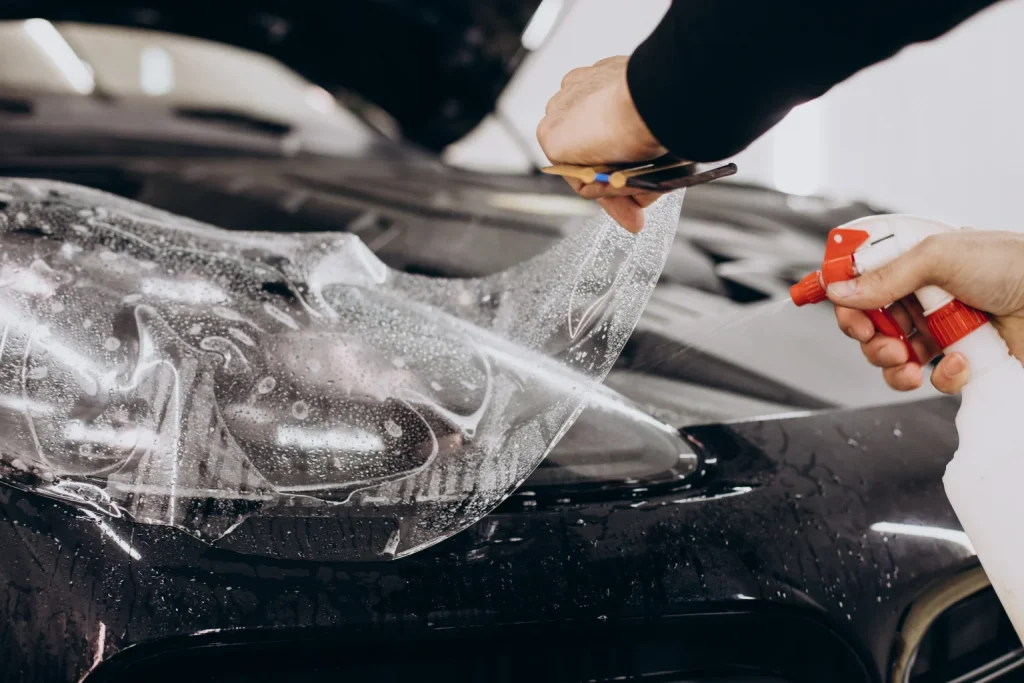
Paint Protection Film is a thick, transparent urethane layer that acts as a physical shield over your Corvette’s painted surfaces. Think of it as armor for your paint – it takes the beating so your factory finish doesn’t have to.
Track-Specific Benefits:
- Impact resistance: PPF absorbs the energy from rock chips, bug splatter, and track debris that would otherwise create permanent damage
- Self-healing properties: Minor scratches and swirl marks disappear with heat exposure (perfect after a hot track session)
- Hydrophobic surface: Quality PPF repels water, brake fluid, and coolant splashes
- Maintains resale value: Protected paint means your C8 commands top dollar when it’s time to upgrade
Maintenance and Cost:
Professional PPF installation for a full front-end package (hood, bumper, fenders, mirrors, A-pillars) typically runs $2,500-$4,000 for a Corvette C8. Full-body coverage can reach $6,000-$8,000. Premium brands like XPEL and 3M offer 10-year warranties, and the film lasts just as long with minimal maintenance.
One C8 owner who invested $6,000 in full-body PPF reported that after two years and multiple track days, the car still looked new – except for the unprotected AC radiators, which showed significant wear.
What Is Ceramic Coating for Your Corvette C8?
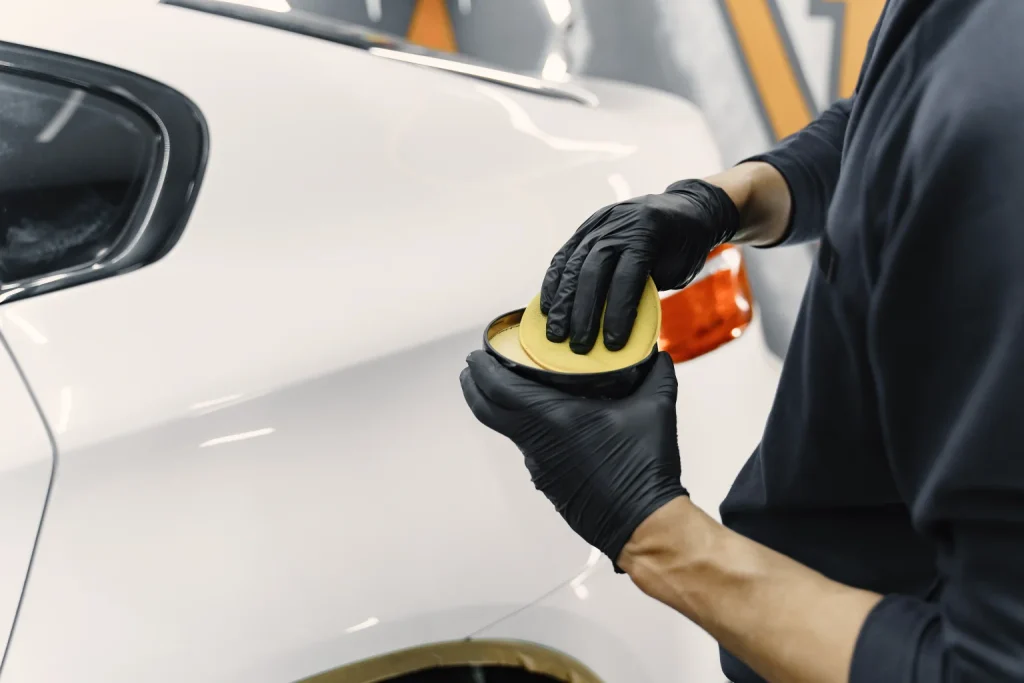
Ceramic coating is a liquid polymer that chemically bonds with your Corvette’s paint, creating a semi-permanent protective layer. Unlike wax that sits on top of paint, ceramic coating becomes part of the surface at a molecular level.
Performance and Appearance Benefits:
- Extreme hydrophobicity: Water beads and sheets off effortlessly, making post-track cleanup incredibly easy
- Chemical resistance: Protects against bird droppings, bug acids, brake dust, and track chemicals
- UV protection: Prevents paint oxidation and fading from sun exposure between track sessions
- Enhanced gloss: Makes your C8’s paint depth and clarity more pronounced
- Scratch resistance: Provides moderate protection against light scratches and swirl marks
What Ceramic Coating Can’t Do:
Here’s the reality: ceramic coating offers minimal impact protection. It won’t stop rock chips or prevent paint damage from flying debris. As one professional detailer noted, “Ceramic coating makes your paint harder to scratch, but it won’t prevent a rock from chipping through.”
Quality ceramic coatings like Modesta or Gtechniq can last 5-10 years with proper maintenance, but expect to pay $1,000-$2,500 for professional application on a Corvette C8.
PPF vs. Ceramic Coating: Head-to-Head Comparison for Track Use
Protection Type | PPF | Ceramic Coating |
Rock chip protection | Excellent – absorbs impacts | Minimal – won’t stop chips |
Scratch resistance | Excellent – self-healing | Moderate – resists light scratches |
Track debris protection | Excellent – physical barrier | Fair – chemical resistance only |
Appearance enhancement | Good – invisible when installed properly | Excellent – dramatic gloss boost |
Maintenance ease | Low – simple wash and dry | Very low – nothing sticks to it |
Durability | 10+ years | 5-10 years |
Cost (front coverage) | $2,500-$4,000 | $1,000-$2,500 |
Best for | Track warriors and high-mileage drivers | Show cars and garage queens |
The Track Reality:
After detailing dozens of Corvette C8s, we’ve seen how track use affects paint differently than street driving. PPF consistently outperforms ceramic coating when it comes to preventing physical damage. One track-focused C8 owner told us, “Without PPF, my hood would be destroyed after a season at the track. The film has saved me from probably 20+ rock chips.”
However, ceramic coating excels at keeping your Corvette cleaner between sessions. Brake dust wipes off effortlessly, and post-track washes take half the time. For appearance maintenance, nothing beats ceramic.
Real Corvette C8 Owners’ Experiences
We gathered insights from Corvette forums and detailing communities to see what actual C8 owners recommend:
The Track Day Regular: “I paid $4,000 for full front PPF and full ceramic coating. After a year of monthly track days, I have zero regrets. The PPF has taken several big hits – you can see the impact marks in the film – but the paint underneath is flawless. The ceramic coating makes cleanup so easy that I can wash the car in 15 minutes after a track day.”
The Weekend Warrior: “I drive maybe 20 miles a week, mostly weekends. I went with just ceramic coating because I’m not dealing with highway debris constantly. Honestly, for low-mileage garage-kept cars, ceramic alone might be enough unless you’re tracking regularly.”
The Mountain Driver: “Living in Colorado, PPF isn’t optional – it’s survival. I’m two windshields into 11,000 miles. My front end would be destroyed without protection. Ceramic coating on top of PPF is the ultimate combo.”
The Full Coverage Convert: “I had my entire C8 wrapped in PPF for $6,000. Two years later, I had to peel a small section near the exhaust because the heat affected it, but everywhere else looks brand new. Meanwhile, my unprotected front radiators are beat up. Best money I’ve spent on the car’s appearance.”
Our Expert Take – Which Protection Should Corvette C8 Owners Choose?
Based on feedback from Corvette owners and our experience protecting high-performance vehicles, here’s our recommendation:
For Track-Focused C8 Owners: PPF is non-negotiable. At minimum, protect your entire front end – hood, bumper, fenders, mirrors, A-pillars, and front fascia. The physical barrier PPF provides is unmatched when debris is flying at 100+ mph. Add ceramic coating on top of the PPF for easier maintenance and enhanced appearance.
For Street-Driven Corvettes: If you primarily enjoy canyon runs and highway cruising with occasional spirited driving, full front PPF with ceramic coating on the entire car offers the best balance. This combination typically costs $3,600-$5,500 and provides comprehensive protection.
For Garage Queens and Show Cars: Ceramic coating alone might suffice if you’re driving under 5,000 miles annually in controlled conditions. However, even one unexpected rock chip can ruin your day. Many show car owners still opt for PPF on high-impact areas just to be safe.
The Ultimate Protection Strategy:
According to professional detailers and automotive forums, layering protection offers the best long-term results. Here’s the ideal approach:
- Paint correction first: Every new C8 has paint swirls from the factory and dealership. Proper paint correction removes these imperfections before protection is applied
- PPF installation: Cover at minimum the full front end; ideally high-impact zones throughout the car
- Ceramic coating over PPF: Adds hydrophobic properties, makes the PPF last longer, and creates an incredible self-cleaning effect
- Regular maintenance: Wash every 2-3 weeks with pH-neutral soap, and get annual ceramic coating touch-ups
One professional installer noted: “A good shop will wrap the PPF edges so you won’t even see it. Cheap shops use pre-cut film that leaves visible edges you can feel. Unless I tell someone the car has PPF, they have no idea it’s there.”
Is the Combined Approach Worth It?
For a $3,600-$5,000 investment, you’re protecting a $70,000+ asset. Consider this: a single hood repaint can cost $2,000-$3,000 and will never match the factory finish perfectly. PPF and ceramic coating preserve your original paint, maintain resale value, and keep your C8 looking showroom-fresh for years.
As one owner put it: “For a car topping $100k, PPF is seriously a no-brainer. I PPF’d my entire BMW 2 Series, and the Corvette deserves even better protection.”
Protect Your Corvette C8 with Nathan’s Detailing
Your Corvette C8 represents the pinnacle of American sports car engineering. Don’t let preventable paint damage diminish its beauty or value. At Nathan’s Detailing, we specialize in protecting high-performance vehicles like the C8 Corvette with premium PPF and ceramic coating solutions.
Our Corvette Protection Services Include:
- Premium XPEL and 3M Paint Protection Film installation
- Professional-grade ceramic coating application (5-10 year durability)
- Paint correction to remove factory imperfections
- Custom protection packages tailored to your driving style
- Edge-wrapped PPF installation for invisible protection
- Post-installation care guidance
Whether you’re a track day enthusiast or a weekend cruiser, we’ll create a protection strategy that matches your needs and budget.
Ready to protect your investment? Book your Corvette paint protection appointment today or get a free quote for PPF or Ceramic Coating.
Want to learn more about protection options? Check out our guides on Gloss vs. Satin PPF finishes, how many layers of ceramic coating you really need, and partial vs. full PPF coverage.
Frequently Asked Questions
Is PPF better than ceramic coating for track driving? Yes, PPF provides superior physical protection against rock chips and debris impacts that are common during track days. Ceramic coating offers excellent chemical resistance and makes maintenance easier, but won’t prevent impact damage. For track use, PPF is the clear winner for protection, though combining both offers optimal results.
Can I apply both PPF and ceramic coating on my Corvette C8? Absolutely, and this is actually the recommended approach. Install PPF first, then apply ceramic coating over the film. This combination provides maximum physical protection from PPF plus the hydrophobic and self-cleaning benefits of ceramic coating. The ceramic coating also helps protect the PPF itself, extending its lifespan.
How long does each protection last on a Corvette? Quality PPF from brands like XPEL or 3M typically lasts 10+ years with proper care. Professional ceramic coatings last 5-10 years depending on the product and maintenance. Both require minimal upkeep – regular washing with pH-neutral soap and avoiding automatic car washes with harsh brushes.
Is PPF worth the cost for Corvette C8 owners? For most C8 owners, yes. The $2,500-$4,000 investment for front-end PPF is significantly less than the cost of repainting damaged panels. One hood repaint can cost $2,000-$3,000 and will never perfectly match the factory finish. PPF also maintains resale value – protected paint is a major selling point for performance cars.
Found this guide helpful? Explore our other in-depth car protection guides below:
What is Ceramic Coating
Ppf Car vs Ceramic Coating
Ceramic Coating Maintenance Guide for Ohio Weather
Ceramic Coating for Dark vs. Light Cars: Differences & Tips
Is Ceramic Coating Worth It for Used Cars?
Ceramic Coating for Matte or Satin Paint — What to Know
How Many Layers of Ceramic Coating Do You Really Need?
Ceramic Coating: Cleveland Routes Where You Need It