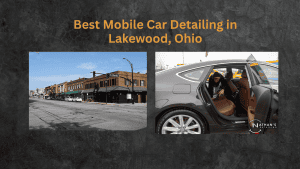



Yes. The core detailing goals stay the same, but cars, SUVs, trucks and minivans are not cleaned in exactly the same way. Vehicle design changes how we reach the roof, move around doors and tailgates, access seat rails, handle third-row seating, clean cargo areas, work around sliding doors, reach pickup beds and position equipment around the vehicle. A sedan usually has fewer cabin zones and a lower roof. A three-row SUV or minivan adds rear seating, more floor area and a larger cargo zone. A truck can add a tall cab, large wheels and a separate bed. The service package defines what is included; the vehicle’s layout changes how we organize and perform that work.
What actually changes when the vehicle type changes?
The important difference is not the badge on the grille. It is the vehicle’s usable surface area, number of cabin zones, height, access points and storage layout.
Two vehicles can receive the same booked detailing package while requiring different working sequences. A four-door sedan may let us move directly from front cabin to rear bench to trunk. A three-row SUV adds another seating zone and a larger cargo opening. A minivan may require sliding-door access from both sides and attention around seat tracks. A pickup can combine a passenger cabin with an exposed truck bed that behaves more like an exterior utility surface than an interior cargo compartment.
Our live mobile car detailing page currently groups most coupes, convertibles and four-door sedans as small; most crossovers, small trucks and small SUVs as medium; and most three-row vehicles, large trucks, SUVs and minivans as large. That size grouping helps us plan the appointment, but this article focuses on process and access rather than cost or duration. citeturn983651search0
Lower, simpler cabin
Usually fewer seating zones, a separate trunk and easier roof access.
Height + cargo
Higher roof, larger glass area, rear hatch and often an optional third row.
Cab + bed
Passenger cabin plus a separate exposed bed, taller body and often larger wheels.
Rows + sliding doors
Large family cabin, long floor area, seat tracks, third-row access and rear cargo space.
How does a sedan or coupe change the detailing process?
A car usually presents the simplest access pattern: front seating area, rear seating area and a separate trunk or hatch. The lower body and roof normally allow easier reach from ground level, while the smaller cabin means fewer seat tracks, cup holders, vents and floor zones than a three-row vehicle.
| Car feature | How it changes the work | What we check |
|---|---|---|
| Lower roofline | Exterior roof washing and drying are usually easier to reach. | Roof edges, upper glass and trim can often be accessed without repositioning equipment as much. |
| Separate trunk | Cargo cleaning is isolated from the passenger cabin. | Trunk floor, side carpet and threshold are treated as their own zone when included. |
| Two-door coupe access | Rear seating may be reached through tilted front seats rather than rear doors. | Rear floor, seat edges and side trim require careful access around seat mechanisms. |
| Compact cabin | Tools can be moved through fewer zones, but tight spaces can reduce hand/tool clearance. | Console sides, seat rails and rear footwells can be narrow despite the smaller vehicle. |
If you are looking for sedan detailing near me, the useful question is not only whether a provider services sedans. Ask whether trunk/cargo cleaning, under-seat areas, glass and cracks/crevices are included in the chosen package. Our mobile detailing inclusions guide explains why the written task list controls those areas. citeturn773479search0
How is SUV detailing different?
SUV detailing usually adds vertical reach and cargo complexity. Even a two-row crossover can have a larger hatch opening, taller rear glass, more upper-body paint area and a roof that requires different technician positioning.
Three-row SUVs add another cabin zone. The third row can create extra seat hinges, cup holders, seatbelt anchors, floor seams and narrow access behind the second row. Folding seats may expose debris that cannot be seen while the row is upright.
| SUV feature | Process change | Common inspection point |
|---|---|---|
| Higher roof | Stable step equipment or changed body position may be required for safe roof access. | Center roof area, roof rails and upper glass. |
| Rear hatch | The hatch is treated as both an exterior panel and an interior cargo-access surface. | Hatch jamb, rear glass, threshold and cargo trim. |
| Third row | Cleaning sequence may move from rear cargo forward or front cabin backward depending on folding-seat access. | Seat bases, cup holders, floor seams and hidden debris around folding mechanisms. |
| Large cargo area | More textile/plastic area and often more family-use contamination. | Cargo floor, side panels, under-floor storage if included and accessible. |
| Larger wheels / tires | Wheel-face, tire-sidewall and barrel access can change with wheel diameter and wheel-well geometry. | Spokes, lug areas and accessible barrels. |
For the exterior side of an SUV appointment, our verified guide to wheels, tires and exterior glass explains why those surfaces are cleaned as separate material zones rather than one generic exterior surface. citeturn773479search0
How is truck detailing different?
A pickup truck combines two distinct structures: a passenger cabin and a utility bed. That changes both access and service boundaries.
The cab is detailed like another passenger compartment, but the bed may contain exposed metal, painted surfaces, spray-in liner, drop-in liner, tie-downs, tonneau hardware, dirt, mulch, work debris or other contamination. A truck bed should therefore be confirmed separately rather than assumed to be part of “full interior.”
The cab
- Vacuum seats, carpet/mats and accessible rear-cab floor according to the booked package.
- Clean storage pockets, console and trim that are included and accessible.
- Work around larger center consoles, rear under-seat storage and fold-up seats when present.
- Keep liquids controlled around switches, electronics and seat hardware.
The bed
- Confirm whether bed cleaning is included before starting.
- Identify painted metal, liner material and tonneau components before choosing chemistry.
- Remove loose debris before wet cleaning.
- Keep heavy construction/work contamination separate from ordinary exterior-soil expectations.
How is minivan detailing different?
Minivans often create the most complex interior access pattern because they combine a large family cabin with sliding doors, multiple seating rows, long floor tracks and a rear cargo zone.
Sliding doors can improve access to the second row, but they also introduce long door tracks and large sill areas where debris collects. Removable or folding seats can create narrow channels, anchor points and hidden floor sections. Third-row seating may fold into a floor well that needs to be inspected separately when that area is part of the service.
| Minivan feature | Why it changes detailing | Where debris commonly hides |
|---|---|---|
| Sliding doors | Creates very wide side access but longer tracks and sill surfaces. | Door tracks, lower jambs and step/sill edges. |
| Second-row captain’s chairs | Creates multiple walkways and seat-base zones. | Between seats, rails, cup holders and seat-mount areas. |
| Third row | Adds another seating and floor zone. | Rear footwell, buckle areas, cup holders and seatback seams. |
| Stowable seating | Seats can reveal floor wells or storage spaces when moved according to manufacturer operation and service scope. | Stow wells, hinge zones and carpet below folded seats. |
| Family cargo use | Often combines groceries, sports gear, strollers, pet use and food-related debris. | Cargo corners, rear threshold and side storage areas. |
When customers search for minivan detailing near me or family car detailing near me, the most useful comparison is whether the provider clearly addresses third-row access, cargo-area inclusion, pet hair, cracks/crevices and material-specific seat cleaning—not whether the page simply says “deep clean.”
How does cabin size change the interior cleaning sequence?
The cleaning sequence should follow access and contamination rather than a rigid rule such as “always start at the driver’s seat.”
A small sedan may be efficient to clean front-to-back. A minivan with a heavily used third row may be easier to work rear-to-front so cleaned areas are not repeatedly crossed. An SUV with folding seats may need the cargo area inspected first so the row can be raised and lowered while surrounding surfaces are still untreated.
Why do third rows and cargo areas need to be confirmed explicitly?
“Interior detailing” can sound like every enclosed space is automatically included, but the written package still controls the job.
Our current Premium Interior package explicitly lists the seats, carpets, mats and trunk/cargo area among the vacuumed surfaces. Our inclusions guide also recommends confirming the third row, cargo area, under-seat spaces and storage compartments rather than assuming every closed or movable area is included. citeturn773479search0turn983651search0
How does vehicle height change exterior detailing?
Vehicle height changes reach, body position and equipment placement. A higher vehicle may require a stable step platform to access the roof safely and evenly. Roof rails, roof-rack feet and tall rear glass can also create additional edges where water and residue collect.
| Exterior feature | Car | SUV / minivan | Truck |
|---|---|---|---|
| Roof access | Often reachable from ground level | May require stable step access | Often requires step access, especially on lifted/full-size trucks |
| Upper glass | Usually lower and easier to reach | Tall windshield/rear glass can require repositioning | Cab glass may be high; rear cab glass can have limited angles |
| Lower body | Lower rocker areas close to ground | Larger rocker/step areas | Running boards, step bars and larger wheel openings may add surfaces |
| Rear access | Trunk lid or small hatch | Large liftgate / cargo threshold | Tailgate plus separate bed |
| Wheels | Typically smaller access envelope | Often larger wheel/tire package | Large tires, deeper wheel wells and possible off-road contamination |
The same exterior-cleaning principles still apply: remove loose contamination safely, select compatible chemistry, clean wheels/tires as separate zones, dry thoroughly and inspect the finish. Our verified wheel, tire and exterior-glass guide covers those surfaces in more detail. citeturn773479search0
How does equipment placement change around larger vehicles?
Mobile detailing needs working space around the vehicle, not just a parking spot beneath it. Our live mobile service page says a standard driveway or roughly two open parking spaces is a suitable setup because we need safe access around all sides of the vehicle. citeturn283804search0
A minivan may need enough side clearance to open a sliding door fully. A pickup may need rear clearance for the tailgate. An SUV may need space behind the vehicle for the liftgate and cargo area. A coupe with long doors may need wider side clearance even though the vehicle itself is smaller.
Our mobile service-area page confirms that our self-contained units carry water, power and professional equipment throughout our Northeast Ohio service area. citeturn773479search4
Do different vehicle types require different cleaning chemicals?
Not because they are cars, SUVs, trucks or minivans. Chemistry should be selected by the material and contamination, not the vehicle category.
A touchscreen in a truck can require the same careful liquid control as a touchscreen in a sedan. Coated leather in an SUV and coated leather in a minivan may require similar material-compatible cleaning. A rubber cargo liner and carpeted cargo floor, however, need different handling even when both are inside an SUV.
That is why our live guide to touchscreens and glossy interior trim starts by identifying the actual surface before selecting moisture, cloth and pressure. citeturn983651search1
How do we change the service sequence by vehicle type?
| Vehicle | Likely access-first decision | Interior sequence consideration | Exterior sequence consideration |
|---|---|---|---|
| Sedan / coupe | Open doors and trunk; confirm rear-seat access in two-door cars | Front cabin → rear cabin → trunk, or reverse if condition requires | Standard panel sequence with relatively easy roof reach |
| Two-row SUV | Open hatch and confirm cargo-area access | Front → rear → cargo, or cargo-first when rear area is heavily used | Plan safe roof and upper-glass access |
| Three-row SUV | Confirm seat-folding position and third-row access | May clean cargo/third row first to avoid crossing finished areas | Height, rear hatch and larger wheels influence equipment position |
| Pickup truck | Confirm whether bed is included; open/close tailgate as required | Cab handled separately from bed | Cab roof, bed sides, tailgate, wheels and running boards treated as distinct zones |
| Minivan | Open sliding doors; confirm third-row and cargo configuration | Often zone-by-zone through rows, tracks and cargo area | Large body, roof and liftgate require clear side/rear workspace |
Our broader guide to how mobile detailing works explains why the order of work can legitimately change with the vehicle, contamination, weather, equipment and booked processes. citeturn773479search3
Does a bigger vehicle automatically need a different service package?
No. Vehicle size and service depth are different decisions.
A large SUV can need only an interior reset. A small coupe can need a more advanced exterior process. The vehicle’s layout tells us how much area must be accessed; the booked package tells us what treatment those areas receive.
Our current service page does use vehicle-size categories when organizing the mobile service, but this article does not duplicate vehicle-size pricing or appointment-duration guidance. For the current service structure, use our live mobile detailing page. citeturn983651search0
What should you tell us before we arrive?
- Vehicle year, make, model and body style.
- Whether the vehicle has two or three seating rows.
- Whether the third row is normally folded or upright.
- Whether the trunk or cargo area needs to be included.
- For trucks, whether you want the pickup bed addressed and what material/liner it has.
- Whether a minivan has stowable/removable seats or heavily soiled door tracks.
- Whether a roof rack, cargo box, bed cover, running board or aftermarket accessory changes access.
- Whether pet hair, food debris, work material, road salt or heavy cargo-area contamination is present.
- Whether the vehicle is unusually tall, lifted or lowered.
- Whether there is enough side and rear clearance at the service location to open all required doors, liftgates or tailgates.
What should drivers compare when searching for SUV, truck, minivan or sedan detailing near them?
Instead of comparing providers only by vehicle label, compare the surfaces and access problems that matter for your body style.
| If you drive… | Ask whether the service covers… | Ask how the provider handles… |
|---|---|---|
| Sedan / coupe | Trunk, rear seat, under-seat spaces, glass, jambs | Tight rear access in two-door cars and low-clearance areas |
| SUV | Third row, cargo floor, rear hatch, roof, wheel wells | Roof reach, seat folding and large cargo zones |
| Truck | Cab, rear storage, running boards and bed if requested | Bed material, large wheels, tailgate and high roof |
| Minivan | All seating rows, cargo area, sliding-door tracks, seat rails | Stowable seats, floor wells and long cabin access |
| Family vehicle | Food debris, pet hair, child-seat surroundings, cargo and high-touch areas | Condition-dependent cleaning without damaging mixed materials |
The safest comparison starts with the provider’s written task list. Our live service-inclusions guide explains what to verify before booking instead of relying on broad package names. citeturn773479search0
How do we adapt mobile detailing to different vehicle designs?
We begin with the vehicle in front of us. We identify the body style, cabin layout, cargo configuration, material types, contamination and any accessories that change access. Then we set up the workspace so doors, hatch panels or the tailgate can be used safely without blocking equipment or forcing us to cross finished areas repeatedly.
The cleaning goals remain consistent: remove contamination safely, use compatible products and tools, complete the surfaces included in the package and inspect the finished result. What changes is the path we take through the vehicle.
Our mobile service page shows our current size groupings and package structure, while our process guide explains how mobile detailing is organized at an approved home or workplace. For coverage across Northeast Ohio, see our verified mobile detailing service area. citeturn983651search0turn773479search3turn773479search4
Need detailing for a car, SUV, truck or minivan?
Tell us the vehicle model, seating layout, cargo configuration and any priority areas when you schedule. We will match the workspace and detailing sequence to the vehicle’s actual design rather than treating every body style as the same car with more square footage.
Explore Mobile Car DetailingService references
[1] Nathan’s Detailing — Mobile Car Detailing. Our current live service page classifies most coupes, convertibles and four-door sedans as small; most crossovers, small trucks and small SUVs as medium; and most three-row vehicles, large trucks, SUVs and minivans as large. It also states that we bring water, power and equipment and need safe working access around the vehicle.
[2] Nathan’s Detailing — What Is Included in Mobile Car Detailing? Our current guide explains that vehicle size changes the amount of surface area, cabin volume, seating rows, cargo space, wheel area and access points without automatically changing the treatment depth of the booked package.
[3] Nathan’s Detailing — What Is Mobile Car Detailing and How Does It Work? Our process guide states that work sequence can change according to vehicle design, contamination, weather, equipment and the booked processes rather than following one rigid order on every vehicle.
[4] Nathan’s Detailing — Mobile Detailing Service Area. Our current service-area page confirms that our self-contained units carry water, power and professional equipment to approved homes and workplaces throughout our Northeast Ohio service area.
[5] Nathan’s Detailing — Touchscreens and Glossy Interior Trim. Our current live guide shows why interior treatment is selected by the actual material—display, glossy plastic or another surface—rather than by whether the vehicle is a sedan, SUV, truck or minivan.
[6] Nathan’s Detailing — Wheels, Tires and Exterior Glass. Our current exterior-cleaning guidance separates wheel, tire and glass procedures because material, contamination and access differ between those surfaces.
Vehicle design changes access, surface area and workflow. The booked package still controls which areas and processes are included. Pricing and appointment duration are intentionally left to the current service and scheduling information rather than duplicated in this guide.