


Yes—pet hair can cost extra for mobile car detailing when it requires additional time and tools. Nathan’s currently lists Extra Dirty / Pet Hair at +$59 on our mobile detailing packages. The charge is based on the actual vehicle condition, not simply whether a dog or cat has ridden in the vehicle. Light loose hair may come out during normal vacuuming. Hair embedded in carpet, cloth upholstery, seat seams or cargo-area fibers can require repeated agitation, targeted pet-hair tools and additional vacuuming. Vehicle size, affected surface area, carpet type, hair type and how deeply the hair is trapped all influence the workload.
Does Nathan’s charge extra for pet hair removal?
Our current mobile packages list Extra Dirty / Pet Hair at +$59 when the condition requires additional time and tools.
The charge currently appears with Premium Interior, Premium Complete and Platinum Complete.
Exact current package pricing and commercial purchase information remain on our live mobile detailing page.
What actually makes pet hair removal more difficult?
Pet-hair difficulty depends on more than the number of visible hairs.
Severity
Light loose hair may respond to ordinary vacuuming. Dense hair across several surfaces can require repeated passes.
Material
Smooth surfaces usually release hair more easily than textured carpet, cloth upholstery or cargo-area fibers.
Distribution
Hair in one rear seat is different from hair spread through two seating rows, floor areas, seat backs and cargo carpet.
Our current mobile detailing inclusions guide uses the same condition-based approach.
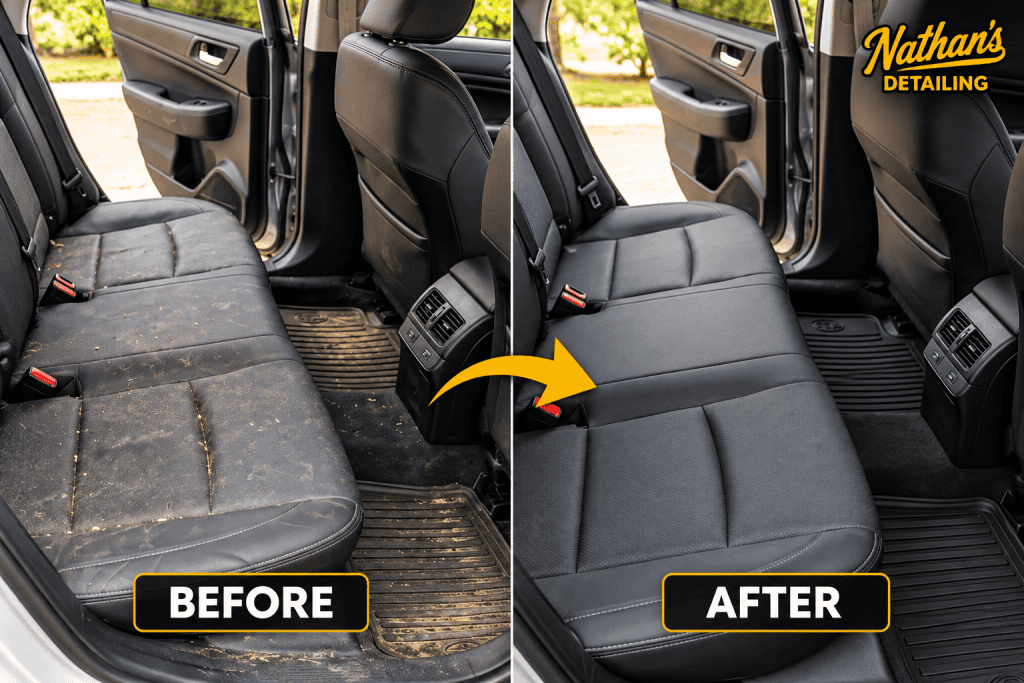
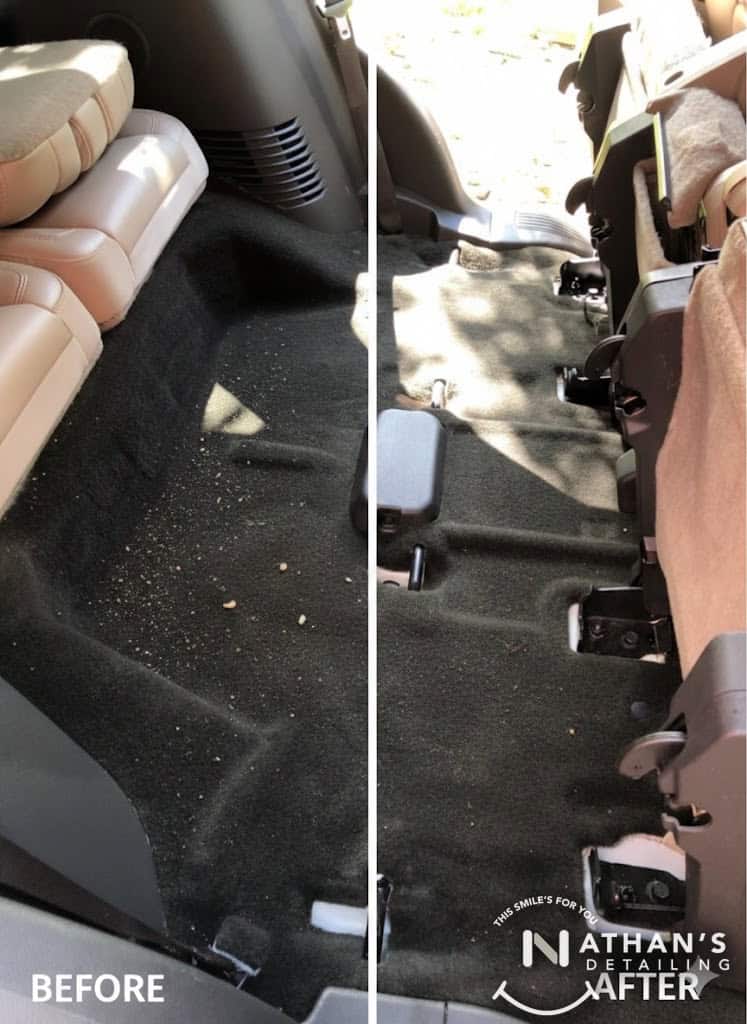
What does pet-hair and interior contamination look like in real vehicles?
Real interiors make the workload difference easier to understand than a generic diagram.


Does light pet hair always cost extra?
No.
Loose hair that comes out during the normal vacuuming already included in the package may not create the same extra workload as embedded hair.
| Pet-hair condition | Likely treatment | Quote implication |
|---|---|---|
| Few loose hairs | Normal vacuuming may be enough | Does not automatically trigger the charge |
| Hair across one seat or floor zone | Additional agitation may be required | Condition should be assessed |
| Embedded hair across carpet and seats | Repeated tool passes and targeted removal | More likely to require additional labor |
| Cabin + cargo area heavily affected | Large surface area plus difficult textile removal | Condition charge becomes much more relevant |
Why can pet hair be difficult to remove from automotive carpet?
Vacuum suction works best when contamination is already free to move.
Pet hair can behave differently because individual hairs can become physically caught between carpet fibers or held against textile surfaces by static attraction.
That is why professional removal may involve loosening the hair before vacuuming it again.
Does upholstery type affect pet-hair removal?
Yes. The material determines how easily hair releases from the surface.
| Interior surface | How pet hair behaves | Likely labor pattern |
|---|---|---|
| Smooth leather or vinyl | Hair often remains near the surface | May release more readily during normal cleaning |
| Cloth seats | Hair can catch in weave, seams and seat edges | May need agitation and repeated vacuuming |
| Automotive carpet | Hair can lodge between or beneath fibers | Often needs specialty pet-hair tools |
| Carpeted cargo area | Often receives direct pet contact and compression | Can become one of the most labor-intensive zones |
| Seat seams / rails | Loose hair settles into narrow gaps | Requires targeted vacuum and detail-tool work |
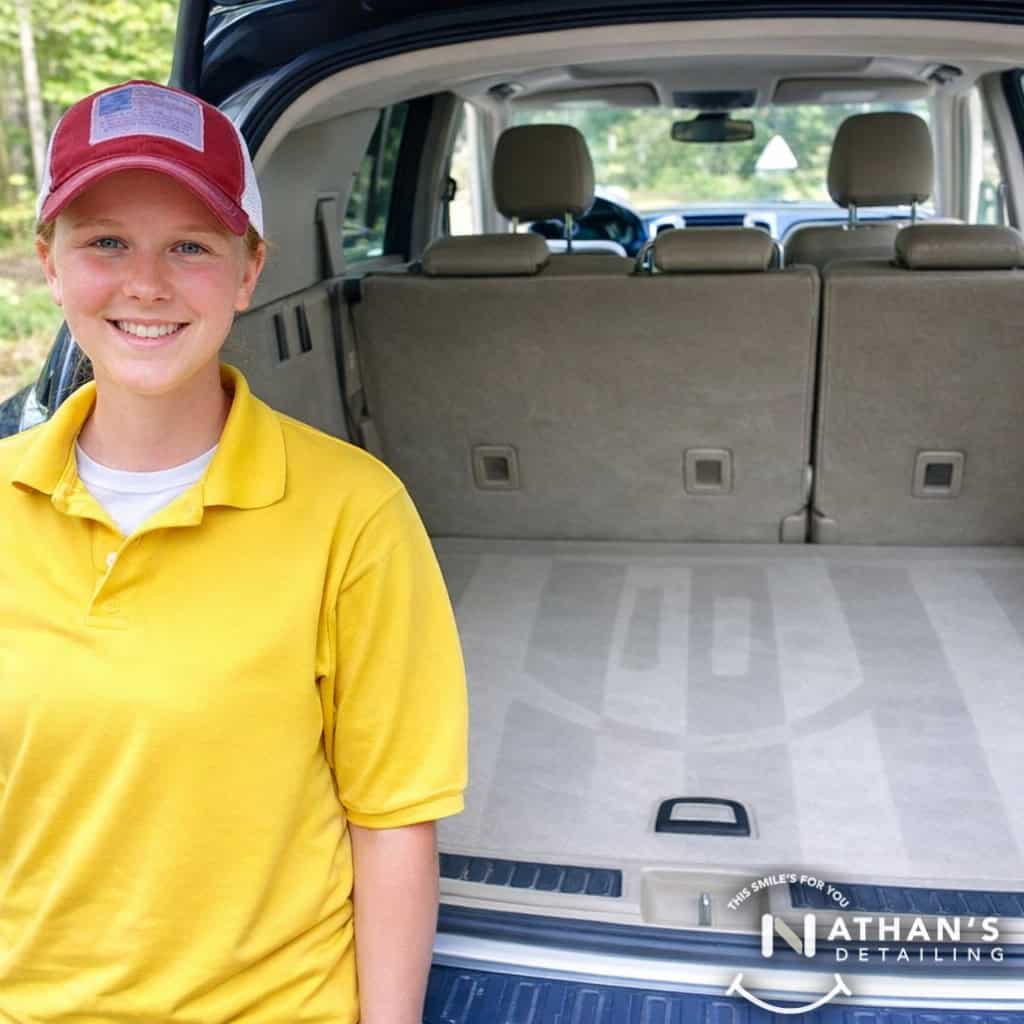
Why can cargo-area pet hair add so much labor?
Large area + direct pet contact
A dog riding in an SUV or crossover cargo area can distribute hair across the floor, rear seat backs, side carpet and threshold instead of concentrating it on one seat.
Repeated trips can press that hair deeper into the textile surface.
The job can then require surface-by-surface agitation instead of a single vacuum pass.
- Cargo-floor carpet
- Folded rear-seat backs
- Side textile panels
- Floor seams
- Rear threshold areas
- Under removable liners and mats
What do different carpet and cargo conditions look like after cleaning?


How does vehicle size affect pet-hair removal?
Vehicle size affects how much interior area can be contaminated.
Nathan’s current package pricing already distinguishes small, medium and large vehicles because those categories contain different amounts of seating, carpet and cargo space.
Pet hair is a separate condition variable.
| Vehicle attribute | Why it matters for pet hair |
|---|---|
| More seating rows | More seats, carpets, seams and floor areas can be affected. |
| Larger cargo area | More carpeted surface exists if the pet rides in the rear. |
| Fold-flat seats | Hair can collect on both cargo surfaces and seat backs. |
| Minivan / three-row SUV | More tracks, floor seams, seating zones and access points. |
| Compact sedan | Less total area, but severe embedded hair can still create substantial labor. |
Can a small car require more pet-hair work than a large SUV?
Yes.
A large SUV with a few loose hairs can be easier to service than a compact sedan with hair tightly embedded throughout every carpeted surface.
Large but lightly affected
More total interior area, but hair remains loose and concentrated in one cargo zone.
Smaller but heavily embedded
Less total interior area, but repeated pet use has forced hair into carpet, seats and narrow seams.
Does hair type affect removal difficulty?
It can.
Hair length, stiffness and how strongly it interacts with a particular textile can change how easily it releases.
The practical question is not the breed of the animal.
Two vehicles with a similar amount of visible hair can therefore require different levels of work.
What happens when pet hair is mixed with mud, sand or other debris?
Pet-hair removal can become more complicated when other contamination is present at the same time.
- Mud
- Sand
- Wet footprints
- Food debris
- Organic material from outdoor activities
- Winter salt
- Staining
- Odor-producing contamination
Hair removal, stain treatment and odor-source cleaning are different tasks.
Does removing pet hair automatically remove pet odor?
No.
Visible pet hair and odor can have the same source, but they do not necessarily exist in the same place.
Odor-producing contamination can remain:
- Inside carpet padding
- Beneath floor coverings
- Inside seat foam
- Under cargo liners
- Inside inaccessible seams
- In areas affected by moisture or leaks
Our current terms explain why no detailing service should guarantee complete removal of every odor or contaminant.
How is pet hair actually handled during interior detailing?
The exact tool sequence depends on the material and condition, but the general process is more deliberate than simply vacuuming once.


Embedded pet hair may require:
- Initial loose-debris vacuuming
- Material-safe agitation
- Rubber or other targeted pet-hair tools
- Repeated vacuum passes
- Focused work around seams and seat rails
- Cargo-area treatment
- Final inspection under more than one viewing angle
Does pet hair make a mobile detail take longer?
It can.
Our current mobile page says most vehicles take roughly 2–4 hours depending on size and condition, and heavy pet hair can add time.
Pet hair increases labor when a technician has to work the same surface repeatedly rather than completing one ordinary vacuum pass.
Is complete removal of every pet hair guaranteed?
No.
Very fine hairs can remain in places ordinary mobile detailing cannot completely access.
- Deep inside carpet fibers
- Under fixed seat rails
- Inside narrow seat seams
- Behind fixed trim
- Under carpet edges
- Inside inaccessible gaps
Our current service-inclusions guide makes this limitation explicit.
How should the finished interior look after pet-hair work?
The final result should be judged against the booked package, the starting condition and what was physically accessible.

Check:
- Accessible carpets for remaining loose hair
- Seat surfaces and seams
- Rear floor areas
- Cargo carpet
- Seat-back carpet
- Edges around seat rails
- Loose hair around door openings
Our post-detail inspection guide explains how to distinguish missed removable contamination from permanent or inaccessible conditions.
How can pet owners reduce future pet-hair labor?
Hair is generally easier to manage before months of repeated travel compress it into carpet and upholstery.
- Vacuum loose pet hair regularly.
- Use removable cargo liners or seat covers where appropriate.
- Clean muddy pet areas before soil dries deeply into carpet.
- Remove loose hair after long trips.
- Keep fold-flat rear seat backs clean if pets ride in the cargo area.
- Wash removable pet blankets and liners separately.
- Schedule professional interior cleaning before the cabin becomes an extreme-condition reset.
What should you tell us before booking a vehicle with pet hair?
The phrase “there is dog hair” does not tell us enough to understand the workload.
Helpful information includes:
- Your vehicle year, make and model
- Whether the pet rides on seats, floor areas or in the cargo area
- How many seating rows are affected
- Whether the hair is loose or deeply embedded
- Whether multiple pets regularly use the vehicle
- Whether mud, sand, salt or other debris is mixed with the hair
- Whether stains are also present
- Whether odor is a concern
When should pet hair removal affect the quote?
Pet hair should affect the quote when it materially changes the amount of labor required to perform the booked detail.
The strongest workload factors are:
- Severity of the hair
- Affected surface area
- Whether hair is loose or embedded
- Carpet and upholstery construction
- Cargo-area involvement
- Vehicle size and number of seating rows
- Static attraction
- Hair type
- Whether other contamination is mixed with the hair
- How many repeated tool passes are required
Nathan’s current published adjustment is Extra Dirty / Pet Hair +$59 for additional time and tools.
That is our current condition charge and should not be generalized as a standard pet-hair price used by every detailer.
For exact current commercial pricing, use our live mobile detailing page.
Have heavy pet hair in your vehicle?
Tell us where the pet normally rides, how much of the cabin is affected and whether the hair is loose or embedded. Photos of the carpet, seating and cargo area can help us understand the actual condition before the appointment.
View Current Mobile Detailing PricingCurrent service references
[1] Nathan’s Detailing — Mobile Car Detailing. Our current mobile packages list Extra Dirty / Pet Hair at +$59 for additional time and tools. The live page also states that heavy pet hair can add time to an appointment.
[2] Nathan’s Detailing — What Does Mobile Car Detailing Include? Our current guide explains that pet-hair difficulty changes with fiber construction, hair type, affected surface area, static attraction and how deeply the hair has become trapped. Loose hair may respond to routine vacuuming while embedded hair may require repeated agitation and targeted tools.
[3] Nathan’s Detailing — Terms and Conditions. Our current terms identify pet hair, dirt, staining, sand, salt, mold, odor, debris, vehicle size/configuration and labor/material requirements among factors that can affect a quote.
[4] Nathan’s Detailing — How Can You Tell Whether Mobile Car Detailing Was Done Properly? Our inspection guide explains that pet-hair results should be judged against the booked scope, starting condition and realistic limits of accessible cleaning.
Prices and condition charges can change. The current live commercial service page and approved vehicle-specific quote control whenever they differ from this educational guide.