

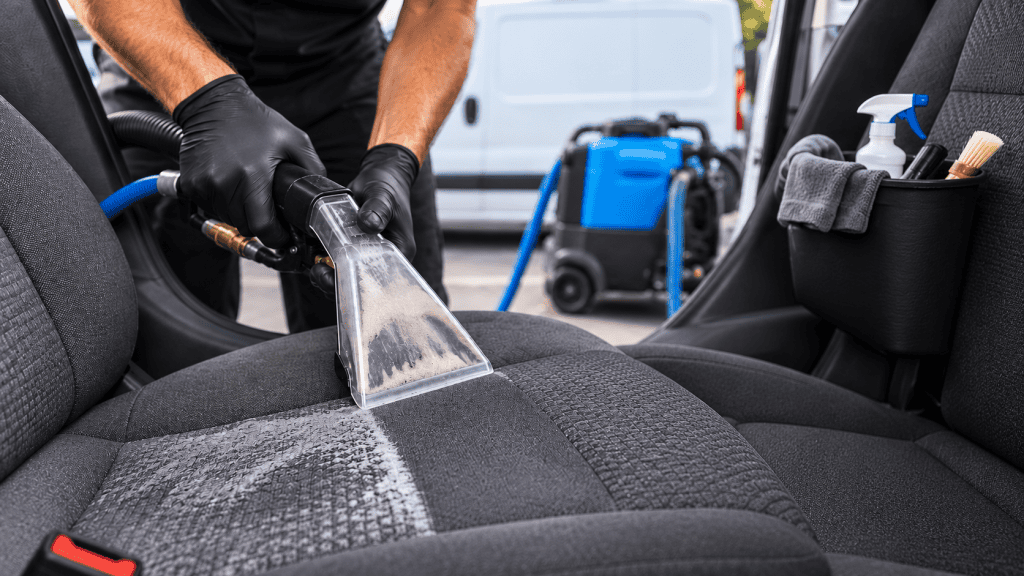

Remove dry soil first. Introduce only recoverable moisture.
Cloth upholstery is normally cleaned by vacuuming loose debris, identifying the stain and fabric, testing compatible chemistry, agitating where appropriate, recovering suspended soil and controlling drying. Extraction may be used on compatible seats, but saturation is not the goal.
Why cloth car seats require a staged cleaning process
Cloth traps contamination at different depths. Crumbs, grit and pet hair may sit on the surface or between fibers. Spills can spread through the weave and into the cushion. Oils and dyes may bond to fibers, while previous cleaners can leave sticky residue that attracts more soil.
This is why cloth upholstery has its own process within car interior material cleaning. During mobile car detailing, we evaluate fabric stability, stain type, seat construction, moisture tolerance and drying conditions before selecting the method.
Fiber and weave
Tight, textured, delicate and specialty textiles do not accept the same agitation or chemistry.
Contamination
Dry particles, water-based spills, oils, dye transfer and old product residue behave differently.
Seat assembly
Foam depth, seams, electronics and airflow determine how much liquid can be safely managed.
Dry soil removal comes before pretreatment
Vacuuming before moisture is introduced prevents grit from turning into muddy residue and reduces abrasion during agitation. Creases, piping, seat tracks and the junction between the cushion and backrest often hold more debris than the center panel.
A suitable vacuum attachment should lift soil without snagging the weave or scraping plastic trim. Pet hair and fibers may require controlled mechanical removal before suction becomes effective. The role of dry suction is explained further in our comparison of a vacuum, extractor and steam cleaner.
Stains are evaluated before stronger chemistry is used
A stain’s appearance does not reliably reveal its composition. Coffee, grease, cosmetics, dye transfer, protein-based spills and old detergent residue can require different treatment. Age, heat and previous cleaning attempts can make removal harder or unsafe.
We test a proposed cleaner in a discreet location and watch for color transfer, texture change, rings or adhesive response. Stronger product is not automatically better: compatibility, controlled dwell time and complete residue recovery matter more than an aggressive label.
The normal cloth-upholstery cleaning sequence
The exact process changes with the fabric and condition, but the workflow remains linear. It is one application of the broader mobile detailing cleaning methods used across a vehicle.
| Stage | Primary task | Process control | Risk avoided |
|---|---|---|---|
| Inspect | Check fabric, seams, wear, stains, sensors and previous damage. | Define safe moisture and agitation. | Treating a defect as removable soil. |
| Vacuum | Remove grit, crumbs, hair and loose particles. | Use suitable attachments and multiple directions. | Creating slurry or rubbing grit into fibers. |
| Test | Apply proposed chemistry in a hidden area. | Check color and texture stability. | Visible discoloration or rings. |
| Pretreat | Target compatible contamination with measured product. | Control placement and dwell time. | Blanket saturation and excess residue. |
| Agitate | Loosen bonded soil from the weave. | Match brush, towel or pad to the textile. | Fuzzing, pilling or seam damage. |
| Recover | Lift suspended soil and liquid by towel or extraction. | Repeat dry passes; monitor recovered moisture. | Leaving detergent and water in the cushion. |
| Dry | Promote evaporation and inspect for wicking. | Air movement, ventilation and practical handoff instructions. | Slow drying, odor and returning stains. |
When hot-water extraction may be used
On compatible cloth, an extractor can deliver solution near a vacuum opening and recover liquid, suspended soil and cleaner. Pretreatment and agitation loosen contamination; extraction performs the recovery step. These tasks should not be collapsed into “the machine removes everything.”
Our dedicated guide explains how hot-water extraction works, including rinse passes and dry recovery passes. The method is selected according to the seat—not merely because an extractor is present in the mobile detailing equipment.
Some areas may receive towel recovery or limited spot treatment instead. Specialty fabrics, weakened seams, deeply padded sections and sensitive components can require a lower-moisture approach.
Why moisture level and drying time vary
Drying depends on more than room temperature. Fabric density, cushion depth, liquid volume, extraction efficiency, air movement, humidity and vehicle ventilation all affect how long moisture remains. A seat that feels nearly dry at the surface may still contain moisture in foam or seams.
Repeated passes without dispensing more solution help recover additional liquid. Air movement and ventilation support evaporation. Customers may receive instructions to leave windows slightly open when safe, use climate control appropriately or avoid placing covers and belongings on damp seating. Exact guidance depends on weather and the vehicle.
Wicking
Dissolved contamination can move toward the surface as moisture evaporates, making a stain appear to return.
Residue
Cleaner left in fibers can feel stiff or tacky and may attract new soil after the vehicle returns to use.
Over-wetting
Excess liquid can extend drying, spread contamination and reach foam or electronic components.
How to evaluate a finished cloth-seat detail
A good result is not judged only by dark recovery water or a temporarily uniform wet appearance. The seat should be inspected after soil recovery for even color, limited residue, intact texture, clean seams and an appropriate drying plan. Existing wear, burns, tears, bleach spots and permanent dye transfer should remain documented rather than hidden by over-treatment.
- Loose debris was removed from panels, seams and creases before wet cleaning.
- The cleaning method matched the fabric and seat construction.
- Stains were treated according to type rather than with one universal chemical.
- Agitation did not fuzz the textile or damage stitching.
- Recovery passes reduced removable moisture and detergent residue.
- The customer received realistic drying and stain-removal expectations.
Exact interior tasks depend on the chosen package and vehicle condition. See what mobile car detailing includes and how the mobile appointment works before comparing providers.
Need cloth-seat cleaning at your Northeast Ohio location?
Nathan’s Detailing can evaluate everyday soil, spills, pet-related contamination and previous cleaner residue as part of an appropriate interior service. Tell us about the stain history and any seat electronics or existing damage when requesting an appointment.
Technical reference: Volvo Support — Cleaning fabric upholstery and headlining. Always follow the care instructions for the exact vehicle and upholstery.