

Noticing swirl marks, fading paint, or stubborn stains on your vehicle? It may be time for professional detailing. Many car owners struggle to know when a simple wash at home isn’t enough and when their vehicle requires the expertise of professional detailing services. Understanding these warning signs can help you maintain your car’s appearance, protect its value, and ensure it looks its best for years to come.
Professional detailing goes far beyond a basic car wash, offering deep cleaning, paint correction, and protective treatments that restore your vehicle’s original luster while safeguarding it against future damage. Recognizing when your car needs this level of care can save you money in the long run and keep your investment looking pristine.
Table of Contents
- Exterior Signs Your Car Needs Detailing
- How to Tell If Your Car’s Paint Is Fading or Dull
- Common Causes of Swirl Marks and Scratches on Your Car
- Are Your Headlights Cloudy or Yellowed?
- Why Water Spots on Your Car Mean It Needs Detailing
- Signs Your Car Has Lost Its Gloss or Shine
- Wheels and Tires
- Interior Signs Your Car Needs Detailing
- Persistent Odors: When Your Car Needs a Deep Clean
- How to Remove Stubborn Stains from Car Upholstery
- Dust and Grime Buildup: Hidden Areas That Need Attention
- Fading or Discolored Interiors: Causes and Solutions
- Tackling Sticky or Greasy Surfaces in Your Car
- Professional Tips for Removing Embedded Pet Hair
- When Professional Detailing Makes the Most Sense
- Protecting Your Investment
- Frequently Asked Questions

Exterior Signs Your Car Needs Detailing
Your car’s exterior faces constant assault from environmental elements, and several telltale signs indicate when professional intervention is necessary. According to the U.S. Department of Energy, regular vehicle maintenance — including proper exterior care — improves efficiency and helps prevent premature wear caused by environmental exposure.
How to Tell If Your Car’s Paint Is Fading or Dull
Paint fading is one of the most obvious indicators that your car needs professional attention. Sun exposure, pollution, and oxidation gradually break down your vehicle’s clear coat and paint layers, leaving behind a lackluster appearance.
Key symptoms of paint fading include:
- Lack of shine or reflective quality
- Colors appearing washed-out or muted
- Paint feeling rough or chalky to the touch
- Dramatic color shifts (vibrant red becoming pink, deep black appearing gray)
- Visible oxidation or chalky residue on the surface
This deterioration doesn’t happen overnight but develops gradually over months or years of exposure. From working with hundreds of clients, we’ve observed that cars parked outdoors without protection show signs of fading 60% faster than those stored in garages. Professional detailing can restore much of this lost vibrancy through paint correction techniques and protective coatings.
Common Causes of Swirl Marks and Scratches on Your Car
Swirl marks appear as fine circular scratches that become especially visible under direct sunlight or bright lighting. These marks typically result from improper washing techniques and environmental factors.
Common causes of swirl marks and scratches:
- Using dirty or contaminated washing materials
- Washing with insufficient lubrication or soap
- Applying excessive pressure during cleaning
- Using automatic car washes with worn or dirty brushes
- Environmental factors like tree branches and airborne debris.
The EPA highlights that contaminants like road salt, dust, and chemical residues can accelerate corrosion and environmental damage to vehicle surfaces, reinforcing the importance of regular detailing and protection. - Dust particles acting as abrasives during the cleaning process
- Improper drying techniques with rough towels
While minor swirl marks might seem cosmetic, they actually compromise your paint’s protective barrier and can lead to more serious damage if left untreated. Professional detailers use specialized tools and techniques like clay bars, polishing compounds, and machine polishers to safely remove these imperfections without damaging the underlying paint.
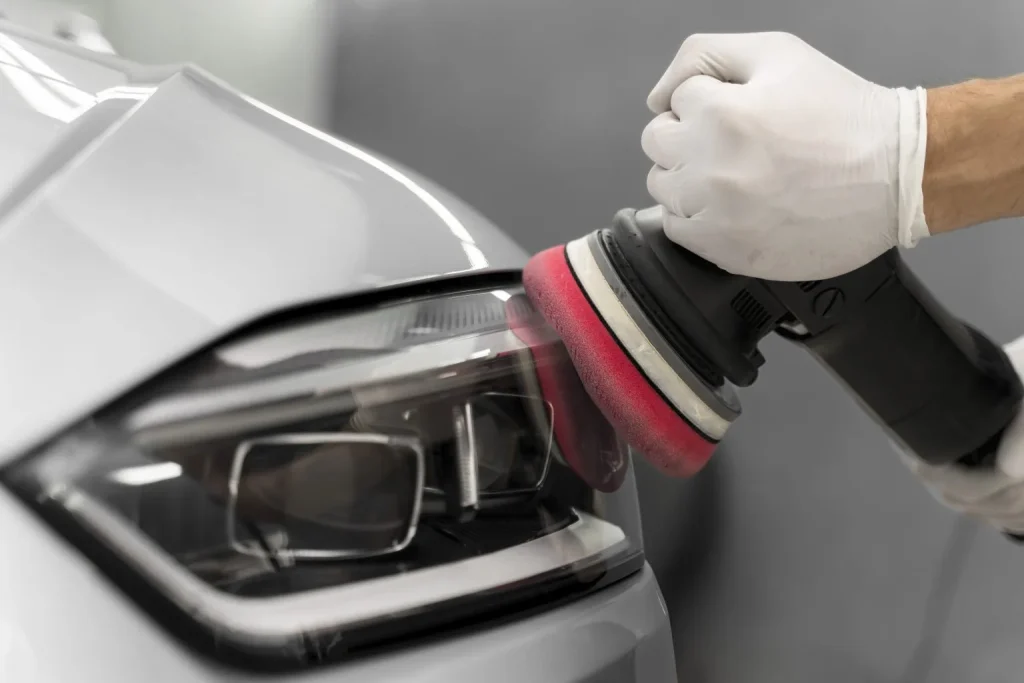
Are Your Headlights Cloudy or Yellowed?
Cloudy or yellowed headlights don’t just look unsightly – they significantly reduce your nighttime visibility and can even fail safety inspections in some areas. This condition occurs when the protective coating on plastic headlight lenses breaks down due to UV exposure and environmental contaminants.
Warning signs your headlights need restoration:
- Slight cloudiness that progresses to thick haze
- Yellow or amber discoloration of the lens surface
- Reduced light output (up to 40% decrease in brightness)
- Failed safety or inspection requirements
- Overall aged appearance that makes your vehicle look older
- Difficulty seeing clearly at night or in low-light conditions
Professional headlight restoration involves sanding away the damaged surface layers and applying new protective coatings, essentially returning your headlights to their original clarity and brightness.
Why Water Spots on Your Car Mean It Needs Detailing
Water spots might seem harmless, but they’re actually mineral deposits that can permanently etch into your paint if left untreated. Hard water contains dissolved minerals like calcium and magnesium that remain behind when water evaporates, creating those stubborn white or chalky marks.
Types and severity of water spots:
- Light spots: Surface-level mineral deposits that can be removed with proper cleaning
- Medium spots: Deposits that have begun to bond with the paint surface
- Severe etching: Permanent damage that requires professional paint correction
- Heat-accelerated damage: Spots that become permanent within a week in hot weather
- Sprinkler system damage: Regular exposure creating patterns of repeated etching
According to automotive experts, water spots that remain on paint for more than a week in hot weather can cause irreversible damage. Professional detailers have access to specialized products and techniques to safely remove these deposits without damaging your paint’s surface.
Signs Your Car Has Lost Its Gloss or Shine
A healthy paint job should reflect light clearly, almost like a mirror. When your car loses this reflective quality, it indicates that the clear coat has been compromised by oxidation and accumulated micro-scratches.
Signs your car has lost its gloss:
- Flat, dull appearance even immediately after washing
- Muted or faded colors that lack vibrancy
- Rough or chalky texture when you run your hand over the surface
- Lack of mirror-like reflectivity under sunlight
- Visible oxidation or haze on the paint surface
- Poor light reflection compared to newer vehicles
This condition is particularly common on older vehicles or those exposed to harsh environmental conditions. Professional paint correction can restore much of this lost gloss through careful polishing and the application of protective coatings that enhance shine while preventing future damage.
Wheels and Tires
How Neglected Wheels and Tires Affect Your Car’s Appearance
Often overlooked, wheels and tires significantly impact your vehicle’s overall appearance. Brake dust, road grime, and environmental contaminants create a layer of stubborn buildup that regular washing can’t remove.
Common wheel and tire problems:
- Brake dust buildup: Dark, metallic particles that bond to wheel surfaces when heated
- Road grime accumulation: Tar, oil, and debris that creates stubborn stains
- Tire discoloration: Fading from deep black to gray or brown appearance
- Rim corrosion: Damage from road salt and environmental exposure
- Embedded contaminants: Particles that penetrate wheel finishes and coatings
- Tire sidewall staining: Brown or discolored patches from environmental exposure
Brake dust is particularly problematic because it contains metallic particles that can actually bond to your wheel surface when heated. Clean, well-maintained wheels and tires can make even an older vehicle look fresh and cared for, while dirty ones instantly make any car appear neglected regardless of the paint’s condition.
Interior Signs Your Car Needs Detailing
Your car’s interior faces unique challenges from daily use, and several signs indicate when professional cleaning is necessary.
Persistent Odors: When Your Car Needs a Deep Clean
Lingering odors in your vehicle are more than just unpleasant – they indicate that contaminants have penetrated deep into your car’s materials.
Common odor sources that require professional treatment:
- Food and beverage spills: Liquids that penetrate seat foam and carpeting
- Tobacco smoke: Particles that embed in all interior surfaces and ventilation systems
- Pet accidents: Organic matter that creates bacterial growth and persistent smells
- Moisture damage: Mold and mildew in ventilation systems and hidden areas
- Body odors: Accumulated perspiration in fabric and leather over time
- Chemical odors: Cleaning products or automotive fluids that have spilled
These odors often persist even after thorough cleaning because the particles causing them have embedded themselves in fabric fibers, foam padding, and even your vehicle’s ventilation system. Air fresheners only mask the problem temporarily rather than addressing the root cause. Professional interior detailing involves specialized extraction equipment and cleaning agents designed to remove these deep-seated contaminants.
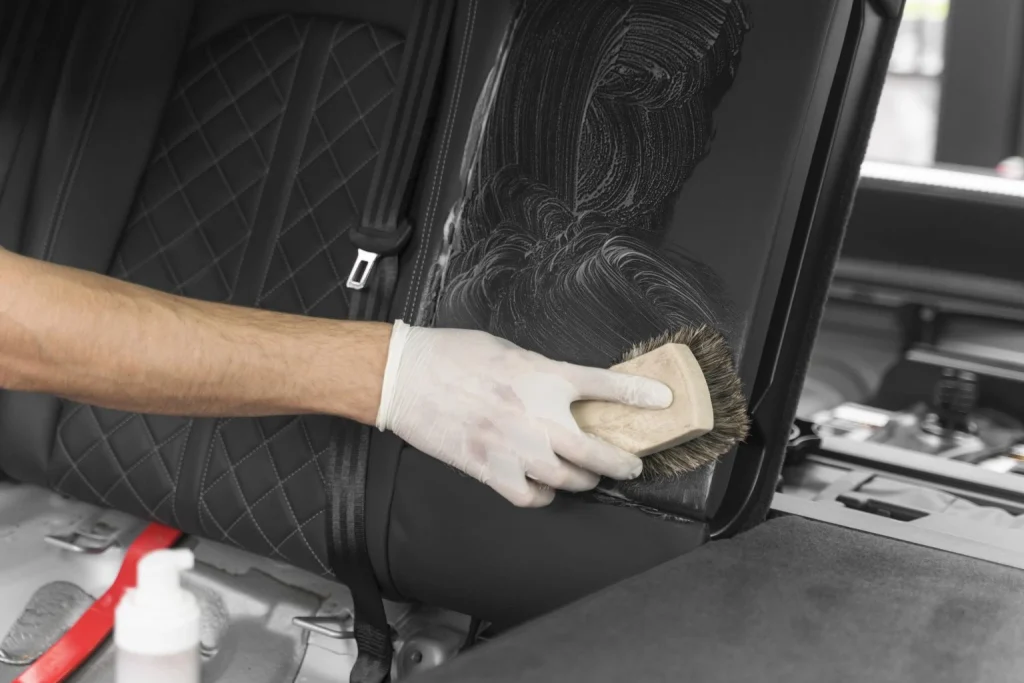
How to Remove Stubborn Stains from Car Upholstery
Coffee spills, ink marks, mud stains, and other accidents are inevitable parts of car ownership. While immediate cleaning can prevent some damage, many stains require professional treatment to fully remove without damaging the underlying material.
Types of stubborn stains requiring professional treatment:
- Liquid stains: Coffee, soda, wine, and other beverages that penetrate deeply
- Ink and dye stains: Pen marks, marker stains, and clothing dye transfer
- Organic stains: Food, blood, vomit, and pet accidents with bacteria concerns
- Grease and oil stains: Makeup, food oils, and automotive fluids
- Environmental stains: Mud, grass, tree sap, and road salt residue
- Set-in stains: Any stain that has been present for weeks or months
Different materials require different approaches. Leather needs conditioning agents to prevent cracking, while fabric upholstery benefits from hot water extraction. After analyzing dozens of case studies, we’ve noticed that DIY stain removal attempts succeed only about 30% of the time, while professional treatment has a success rate above 85% for most common stains.
Dust and Grime Buildup: Hidden Areas That Need Attention
Your car’s interior contains numerous crevices and hidden areas where dust and grime accumulate over time.
Hidden areas that collect dust and grime:
- Air vents and HVAC system: Dust and debris that circulates through your cabin air
- Under and between seats: Food particles, dirt, and debris in hard-to-reach areas
- Door jambs and weatherstripping: Accumulated dirt in rubber seals and metal channels
- Console crevices: Dust and debris in gaps around controls and storage areas
- Floor mat edges: Buildup underneath and around removable floor mats
- Seat tracks and mechanisms: Grease, dirt, and debris in moving parts and rails
This accumulation isn’t just unsightly – it can impact your vehicle’s ventilation system efficiency and create an environment for bacteria and allergens to thrive. Regular vacuuming addresses surface debris but can’t reach these hidden areas effectively. Professional detailing includes thorough cleaning of all these overlooked areas using specialized tools and techniques.
Fading or Discolored Interiors: Causes and Solutions
Interior fading occurs primarily due to UV exposure through windows, causing plastics to fade and leather or fabric to lose their original colors. Dashboard surfaces are particularly susceptible, often developing a chalky or washed-out appearance over time.
Common interior fading problems:
- Dashboard discoloration: Plastic surfaces becoming chalky or washed-out in appearance
- Seat fading: Leather and fabric losing original color intensity and richness
- Door panel damage: Armrests and trim pieces showing wear patterns and fading
- Steering wheel deterioration: Cracking, fading, and texture changes from UV exposure
- Console fading: Center console and control surfaces losing original color
- Carpet and floor mat fading: High-traffic areas showing wear and significant color loss
The damage is gradual but cumulative. What starts as slight color variation eventually becomes obvious discoloration that makes your entire interior look aged and worn. Heat accelerates this process, making vehicles in sunny climates particularly vulnerable. Professional treatment can often restore much of the original color while applying protective treatments that prevent future fading.
Tackling Sticky or Greasy Surfaces in Your Car
Dashboard surfaces, steering wheels, and center consoles often develop a sticky or greasy feel over time. This occurs when plasticizers in synthetic materials break down due to heat and UV exposure, creating a tacky surface that attracts dirt and feels unpleasant to touch.
Areas commonly affected by stickiness:
- Dashboard surfaces: Particularly the upper dashboard exposed to direct sunlight
- Steering wheel: Areas where hands frequently contact and leave oils
- Center console: Controls, buttons, and storage area surfaces
- Door panels: Armrests and frequently touched areas around handles
- Gear shift and controls: High-contact areas that accumulate oils and residue
Household cleaners often make this problem worse by stripping away protective coatings or leaving residues that attract more dirt. The sticky feeling can also transfer to your hands and clothing, creating an ongoing cycle of contamination. Professional interior detailing uses specialized cleaners and conditioners designed to remove these degraded materials while restoring the original texture.
Professional Tips for Removing Embedded Pet Hair
Pet hair presents unique challenges because it embeds deeply into fabric fibers and can be nearly impossible to remove with conventional vacuuming alone. The hair often carries static electricity that makes it cling more tightly to surfaces.
Professional pet hair removal techniques:
- Rubber glove method: Using textured gloves to gather hair through friction
- Specialized brushes: Tools designed to penetrate fabric fibers and lift embedded hair
- High-powered extraction: Industrial vacuum systems with specialized pet hair attachments
- Anti-static treatments: Products that reduce hair’s tendency to cling to surfaces
- Steam cleaning: Heat and moisture to loosen hair embedded deep within fibers
- Fabric rake tools: Specialized implements that lift hair from deep within upholstery
Professional detailers also treat surfaces with anti-static agents that make future hair removal easier and reduce the amount that initially embeds. For pet owners, regular professional interior detailing every 6-8 weeks can prevent hair from becoming so deeply embedded that removal becomes extremely difficult and time-consuming.
When Professional Detailing Makes the Most Sense
Several situations clearly indicate that professional detailing is worth the investment rather than attempting DIY solutions.
Prime scenarios for professional detailing:
- Vehicle sales preparation: Professional detailing can increase resale value by hundreds or thousands of dollars
- Lease return preparation: Avoid excessive wear and tear charges that often exceed detailing costs
- Special occasions: Weddings, job interviews, or important business meetings where appearance matters
- Seasonal maintenance: Preparing for or recovering from harsh winter or summer conditions
- Post-accident restoration: Addressing damage and contamination after collision repairs
- Annual deep cleaning: Comprehensive maintenance to preserve long-term vehicle value
- Neglect recovery: Addressing months or years of accumulated damage and wear
Buyers form impressions within seconds, and a professionally detailed car suggests careful ownership and maintenance. For lease returns, professional detailing can help you avoid excessive wear and tear charges that often exceed the cost of detailing services. Many lease agreements include specific cleanliness standards that are difficult to achieve with home cleaning methods.
Protecting Your Investment
Professional detailing isn’t just about immediate appearance – it’s about protecting your investment long-term. Paint protection films, ceramic coatings, and interior treatments can prevent damage that would otherwise require expensive repairs or replacement.
Long-term benefits of professional detailing:
- Value preservation: Vehicles receiving regular professional care maintain 15-20% better resale value
- Damage prevention: Protective treatments prevent costly paint and interior restoration work
- Extended material lifespan: Proper maintenance significantly extends the life of paint, leather, and fabric
- Cost effectiveness: Regular detailing costs significantly less than major restoration work
- Enhanced driving experience: Clean, well-maintained vehicles provide better comfort and pride of ownership
- Health benefits: Professional cleaning removes allergens and bacteria that negatively affect cabin air quality
According to automotive industry research, vehicles that receive regular professional detailing maintain their value 15-20% better than those cleaned only at home. This difference becomes especially significant for luxury vehicles or cars you plan to keep for many years. The key is recognizing these warning signs early and addressing them before minor issues become major problems requiring extensive correction work.
Frequently Asked Questions
Q: How often should I get my car professionally detailed? A: Most vehicles benefit from professional detailing every 3-6 months, depending on usage and environmental conditions. Cars exposed to harsh conditions (daily parking outdoors, dusty environments, frequent long drives) may need detailing every 2-3 months, while garage-kept vehicles driven occasionally can go 6-12 months between services.
Q: What’s the difference between a car wash and professional detailing? A: A car wash focuses on basic cleaning of visible surfaces, while professional detailing includes deep cleaning, paint correction, protection application, and restoration of both interior and exterior surfaces. Detailing addresses problems that regular washing cannot fix, such as swirl marks, embedded stains, and material restoration.
Q: Can professional detailing remove all scratches and swirl marks? A: Professional detailing can remove most minor scratches and swirl marks through paint correction techniques. However, deep scratches that penetrate through the clear coat to the paint layer may require touch-up paint or panel repainting. A professional can assess your specific situation and recommend the best approach.
Q: Is mobile detailing as effective as shop-based services? A: Mobile detailing can be just as effective as shop-based services when performed by experienced professionals with proper equipment. The main advantage is convenience, as the service comes to your location. However, some specialized services like paint correction may be better performed in a controlled shop environment.
Q: How long does professional detailing take? A: Basic detailing typically takes 2-4 hours, while comprehensive services including paint correction and protection application can take 6-8 hours or even multiple days for extensive restoration work. The time required depends on your vehicle’s size, condition, and the services requested.
Q: Will detailing remove cigarette smoke odor? A: Professional detailing can significantly reduce or eliminate cigarette smoke odor through specialized cleaning agents, ozone treatment, and thorough cleaning of all interior surfaces including the ventilation system. However, heavily contaminated vehicles may require multiple treatments for complete odor elimination.
Q: Can detailing fix faded plastic trim? A: Yes, professional detailing can often restore faded plastic trim using specialized products that penetrate the material and restore its original color and texture. However, severely damaged trim may require replacement rather than restoration.
Q: What should I do to maintain my car between professional detailing sessions? A: Regular washing with proper techniques, immediate cleanup of spills, parking in shade when possible, using floor mats and seat covers, and avoiding eating or smoking in the vehicle will help maintain your car’s condition between professional services.
Want to know more about car detailing? Consider checking our next guides:
What Is Mobile Car Detailing?
How to Detail A Car Interior?
Car Wash vs Detailing
How to Remove Stains from Car Seats
Detailing for Classic Cars — Special Considerations & Tips
Top 5 Questions Car Owners Ask Before Scheduling Detailing
Common Detailing Mistakes Car Owners Make at Home
How to Spot a Quality Detailing Service Before Booking
Spring Car Detailing Checklist for Ohio After Winter
Car Detailing Myths
This article was reviewed by Nathan’s Detailing experts with over a decade of experience in automotive paint protection. For professional PPF installation, ceramic coating application, or comprehensive mobile car detailing services, contact our team today.