
You’ve just invested in a Tesla – congratulations on joining the electric revolution! Now comes the next big decision: protecting that sleek paint job with Paint Protection Film (PPF). But here’s where many Tesla owners hit a crossroads: should you go with matte or gloss PPF? It’s not just about protection anymore; it’s about making a statement. Let’s break down the Tesla matte vs. gloss PPF debate so you can choose the finish that truly matches your style.
What Is PPF and Why Tesla Owners Choose It
Paint Protection Film acts like a second skin for your Tesla, shielding it from rock chips, scratches, UV damage, and everyday wear. For a vehicle that can cost anywhere from $40,000 to over $100,000, protecting your investment makes perfect sense.
Tesla’s paint, while beautiful, is notoriously soft and prone to chipping – especially on high-impact areas like the front bumper, hood, and side mirrors. That’s where PPF comes in. But beyond just protection, modern PPF offers customization options that can completely transform your Tesla’s appearance. The two most popular finishes? Matte and gloss.
Matte vs. Gloss PPF: The Core Differences
Aesthetic Differences
Gloss PPF maintains your Tesla’s factory shine, preserving that showroom-fresh look. It enhances the depth of your paint, making colors pop with a mirror-like reflection. If you fell in love with your Tesla’s original appearance, gloss PPF keeps it exactly that way – just protected.
Matte PPF transforms your Tesla with a sophisticated, non-reflective finish. It creates a sleek, modern aesthetic that turns heads and makes your car stand out from the sea of glossy Teslas on the road. The satin texture scatters light, reducing glare and giving your vehicle a subtle, understated elegance.
Maintenance and Cleaning
Here’s where things get interesting. Gloss PPF shows water spots, fingerprints, and swirl marks more readily, meaning you’ll want to wash your Tesla more frequently to maintain that pristine look. However, when it’s clean, it absolutely sparkles.
Matte PPF requires less frequent washing and is more forgiving with minor imperfections. Smudges and fingerprints are less visible against the non-reflective surface. That said, when matte PPF does get dirty, you’ll need to use PH-friendly and wax-free cleaning products – regular car wash soaps can add unwanted shine or create uneven patches.
Durability and Protection
Both finishes offer identical protection levels – they’re the same film, just with different surface treatments. You’ll get the same self-healing properties, rock chip resistance, and UV protection whether you choose matte or gloss. Modern PPF from reputable brands typically comes with 5-10 year warranties, regardless of finish.
Pros and Cons of Matte PPF
Pros:
- Instant head-turner appeal – Your Tesla immediately looks custom and unique, even from a distance
- Hides imperfections better – Minor swirls, water spots, and fingerprints are far less visible
- Reduces glare – The non-reflective finish is easier on the eyes and photographs beautifully
- Makes common colors pop – Transforms Pearl White, Solid Black, or Midnight Silver Metallic into something special
- Less frequent washing needed – More forgiving of daily wear between washes
Cons:
- Requires specific cleaning products – You can’t use just any car wash soap; matte-specific formulas are essential
- Can dull vibrant colors – If you have Ultra Red or Deep Blue Metallic, matte might tone down that vibrancy
- Shows contamination differently – Bird droppings, tree sap, and bugs need prompt removal to avoid staining
- Limited color enhancement – Unlike gloss, it doesn’t amplify your Tesla’s depth and shine
Pros and Cons of Gloss PPF
Pros:
- Preserves factory appearance – Your Tesla looks exactly as it did on delivery day, just protected
- Enhances paint depth – Makes colors look richer and more vibrant, especially on unique shades
- Easy cleaning routine – Any quality car wash soap works perfectly fine
- Highlights rare colors – Makes Ultra Red, Deep Blue Metallic, or custom wraps really shine
- Widely available – More installers are experienced with gloss, potentially lowering installation costs
Cons:
- Shows every imperfection – Swirl marks, water spots, and fingerprints are highly visible
- Requires frequent maintenance – You’ll want to wash more often to keep that mirror shine
- Less unique appearance – Won’t dramatically change your Tesla’s look or help it stand out
- Higher glare – The reflective surface can be intense in direct sunlight
Which Finish Matches Your Tesla Model’s Style?
After working with hundreds of Tesla owners, we’ve noticed clear patterns in finish preferences based on model and color.
Model 3 & Model Y – These are the most common Teslas on the road. If yours is in Pearl White Multi-Coat, Solid Black, or Midnight Silver Metallic, matte PPF helps you break away from the pack. However, if you have Ultra Red or Deep Blue Metallic, gloss PPF will make those stunning colors truly pop.
Model S & Model X – These luxury models already command attention. Gloss PPF maintains that premium, sophisticated look. However, we’ve seen Model S owners with black or white go matte for an ultra-modern, stealth aesthetic that’s absolutely striking.
Model 3 Performance & Model Y Performance – These sport-oriented models look incredible with matte PPF, giving them an aggressive, race-inspired appearance. The matte finish complements the performance aesthetic perfectly.
Cybertruck – While the stainless steel doesn’t need traditional PPF, many owners are exploring matte and gloss color wraps combined with PPF for ultimate protection and customization.
Expert Tips: Combining PPF with Ceramic Coating for Maximum Protection
Here’s a pro tip from detailing experts: you can apply ceramic coating on top of both matte and gloss PPF for enhanced protection. This creates a triple-layer defense system: paint → PPF → ceramic coating.
For gloss PPF, ceramic coating adds extreme hydrophobic properties, making water bead off dramatically and making washing even easier. It also enhances that already-impressive shine.
For matte PPF, use a matte-specific ceramic coating. This maintains the non-reflective finish while adding stain resistance, easier cleaning, and UV protection. Regular ceramic coatings will add gloss to matte PPF, ruining the effect.
According to XPEL, one of the leading PPF manufacturers, combining their film with proper ceramic coating can extend the life and appearance of your protection by 2-3 years.
When to Get Professional Tesla Detailing & Tint Services
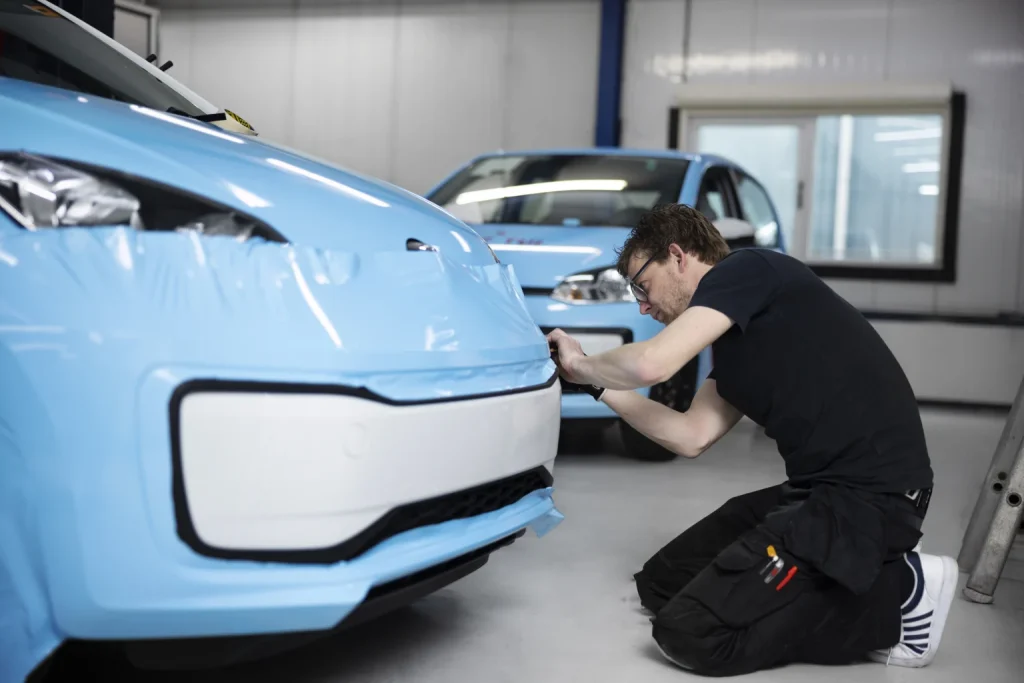
PPF installation is an investment – typically $5,000-$8,000 for full front coverage or $8,000-$12,000 for full-body protection. This isn’t a DIY job. Professional installation ensures:
- Proper surface preparation and paint correction
- Seamless edges with no lifting or bubbling
- Correct film stretch around complex curves (especially on Model 3/Y door handles and mirrors)
- Warranty protection from the installer and manufacturer
- Color-matched precision on panel edges
Look for installers certified by major PPF brands like XPEL, 3M, or SunTek. Ask to see their previous Tesla work – these cars have unique body lines that require specific experience.
Many Tesla owners also combine PPF installation with window tinting. This creates a cohesive protective package while you already have your vehicle at the shop. Quality ceramic window tint blocks heat and UV rays, protecting your interior and improving comfort in your all-glass Tesla.
Ready to upgrade your Tesla’s look? Explore Nathan’s Detailing’s professional Vehicle Tint and PPF services. Our certified technicians specialize in Tesla installations and can help you choose the perfect finish for your style.
The Bottom Line: Which Should You Choose?
There’s no wrong answer in the Tesla matte vs. gloss PPF debate – it comes down to your personal preferences and goals.
Choose Gloss PPF if:
- You love your Tesla’s original showroom appearance
- You have a unique color like Ultra Red or Deep Blue Metallic
- You don’t mind more frequent washing and maintenance
- You want maximum color depth and shine
Choose Matte PPF if:
- You want your Tesla to stand out with a custom look
- You have a common color like white, black, or silver
- You prefer lower-maintenance protection
- You love modern, understated elegance
Both finishes provide identical protection against rock chips, scratches, and UV damage. Both are self-healing. Both come with long warranties. The difference is purely aesthetic and maintenance-related.
Consider visiting a professional installer to see both finishes in person on actual Teslas. Many shops have demo vehicles or sample panels. Seeing them side-by-side in natural light can make your decision much easier.
Get a free Tesla PPF quote from Nathan’s Detailing today and protect your investment with the finish that matches your style.
FAQs
Does matte PPF make a Tesla harder to clean?
Not harder, just different. You’ll need to use matte-specific cleaning products instead of regular car wash soap. The upside is that matte PPF requires less frequent washing since it hides minor imperfections better than gloss.
How long does gloss PPF last on a Tesla?
Quality gloss PPF from brands like XPEL or 3M typically lasts 7-10 years with proper care. Most manufacturers offer 5-10 year warranties covering yellowing, cracking, and peeling.
Can I apply ceramic coating on top of PPF?
Absolutely! Ceramic coating over PPF adds an extra layer of protection and makes maintenance even easier. Just make sure to use matte-specific ceramic coating if you have matte PPF – regular ceramic coating will add unwanted gloss.
Which PPF finish increases resale value more?
Both protect your paint equally, preserving resale value. However, gloss PPF maintains the original factory appearance, which some buyers prefer. Matte PPF is more polarizing – some buyers love it, others want to remove it. If resale value is your primary concern, gloss might be the safer bet.
Can I switch from matte to gloss PPF later?
Yes, PPF is removable without damaging your paint (when installed and removed properly). You can have the matte film removed and replace it with gloss, though you’ll pay for a new installation. This flexibility is one of the advantages of PPF over permanent paint modifications.
Found this guide helpful? Explore our other in-depth car protection guides below:
What is PPF for Cars
Bundle Services: Why Ceramic Coating, PPF & Tinting Work Best Together
Can You Apply PPF Over Existing Paint Damage?
Gloss vs. Satin PPF: Which Finish Suits Your Car’s Look?
Partial vs. Full PPF: What’s Best for Your Budget and Car Type
How Cleveland Weather Damages Car Paint & How to Prevent It