
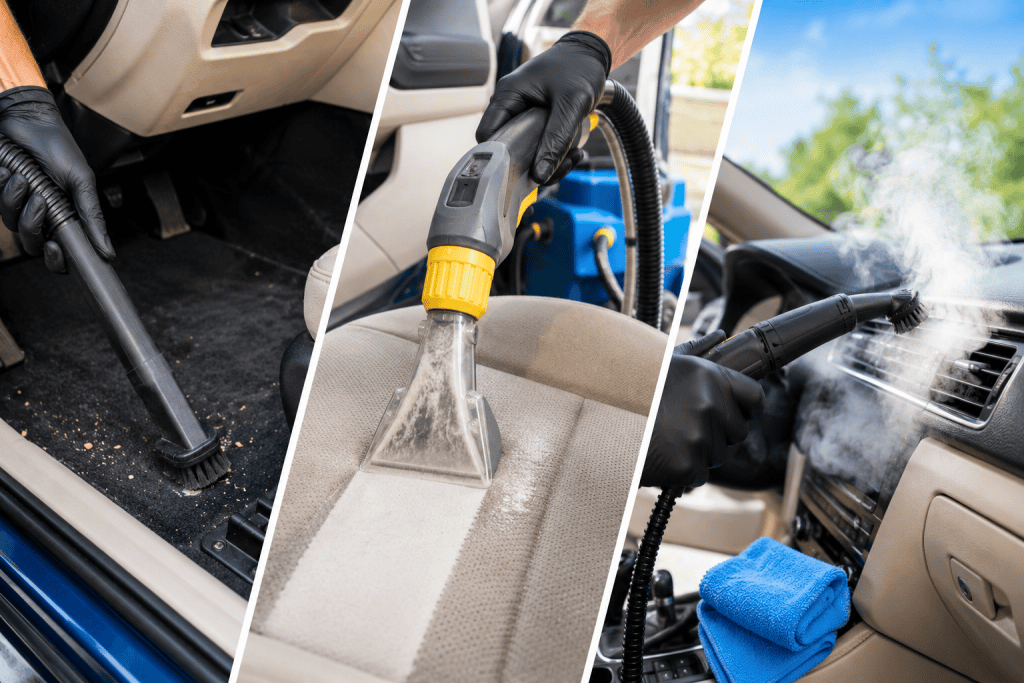

A vacuum removes loose debris; an extractor applies and recovers cleaning solution from compatible textiles; a steam cleaner uses heated vapor to loosen residue on compatible surfaces. Each machine solves a different contamination problem.
Vacuum, Extractor and Steam Cleaner Solve Different Contamination Problems
Vacuum, extractor and steam-cleaner functions differ by what enters the machine, what acts on the surface and what the machine recovers. A vacuum moves air to collect loose material. An extractor delivers liquid into compatible textile fibers and recovers the liquid with suspended soil. A steam cleaner delivers heated vapor that softens or loosens residue for removal with a towel, nozzle or follow-up vacuuming.
The machines overlap at the edges but are not interchangeable. A wet/dry vacuum can collect a spill, yet it does not meter cleaning solution through an upholstery tool. An extractor has a vacuum motor, yet its defining function is controlled solution delivery and recovery. Steam can loosen contamination, yet loosened soil still must leave the surface.
Airflow lifts loose dust, sand, crumbs and hair.
Liquid delivery and suction remove suspended textile soil.
Heated vapor loosens residue in targeted compatible areas.
Machine choice therefore follows contamination class, material compatibility and the required recovery method. The machines are only one part of what a mobile car detailing service may include; the booked package and the vehicle’s condition determine what is actually used.
What Does a Vacuum Remove During Mobile Detailing?
A detailing vacuum removes loose particulate contamination before liquid cleaning begins. Typical targets include sand, soil, crumbs, lint, detached pet hair and debris trapped along seat rails, seams, floor-mat edges and cargo areas.
Dry particulate removal from carpets, seats and crevices
Vacuuming works through airflow and pressure difference. Air carries detached particles through a nozzle and hose into a collection tank or bag. Nozzle shape changes access and agitation: a crevice tool reaches narrow gaps, while a wider upholstery tool covers seat and carpet surfaces.
Dry removal should normally occur before extraction or steam. Adding moisture to loose dust can turn removable particulate into slurry, push soil deeper into textile fibers and increase the liquid load that later recovery passes must remove.
Wet/dry vacuum capability does not equal textile extraction
A wet/dry vacuum can collect suitable liquids when configured with the correct filter or pickup arrangement. That ability supports spill recovery and controlled moisture pickup. It does not transform the machine into an extractor because the vacuum does not simultaneously inject a measured cleaning or rinse solution through the working tool.
Professional inventory varies by provider. See mobile car detailing equipment for the relationship between machines, utilities, hoses and hand tools. Our guide to mobile detailing power supplies explains how those machines are supported at the service location.
What Does a Carpet Extractor Remove During Mobile Detailing?
A carpet extractor removes soil that has been dissolved, emulsified or suspended in liquid within compatible carpet and upholstery. The machine combines a solution system with a recovery vacuum, allowing the working tool to apply liquid and pull contaminated moisture into a separate recovery tank.
Solution delivery, agitation and soil recovery
Extraction begins after thorough dry vacuuming. The technician identifies the textile, tests the product, applies a controlled pretreatment and allows suitable dwell time. Agitation may help distribute chemistry and release bonded soil. The extractor then applies controlled solution or rinse water and immediately recovers it through the tool.
More liquid does not automatically produce deeper cleaning. Excess solution can reach padding, seams, electrical components or adhesive layers. The correct volume depends on material construction, soil level, tool design, vacuum performance and drying conditions.
Moisture recovery and drying limitations
Extraction reduces soil and chemical residue only when recovery passes remove the suspended material. Slow, overlapping vacuum-only passes increase liquid recovery after solution flow stops. Air movement, temperature, humidity, textile thickness and initial liquid volume then determine drying time.
Extraction does not repair faded fabric, torn fibers or permanent dye loss. It also cannot guarantee removal of every stain because stains differ by chemistry, age, prior treatment and penetration depth.
What Does a Steam Cleaner Remove During Mobile Detailing?
A steam cleaner uses heated vapor to loosen grease, residue and soil in targeted compatible areas. Detailers may use controlled steam around seams, cup holders, textured plastic, selected hard surfaces, glass edges and other confined areas where a towel or brush alone has limited reach.
Heat and vapor loosen residue in seams and hard surfaces
Heat reduces the viscosity of some oily residues and weakens the bond between contamination and a compatible surface. Vapor reaches irregular geometry, while the nozzle, brush attachment or microfiber cover adds mechanical action. The technician then wipes or recovers the loosened material.
Steam is not “dirt disappearance.” It transfers energy and moisture to the surface. The process remains incomplete until released soil is captured rather than redistributed.
Heat-sensitive materials and electronics require restraint
High heat and concentrated vapor can affect adhesives, coatings, leather finishes, headliner backing, instrument displays, switches and electronic openings. Distance, dwell time, attachment choice and towel buffering must follow the material and equipment instructions.
Steam should not be presented as universal disinfection. Effective microbial reduction depends on temperature at the surface, contact time, organism, material and validated procedure.
Vacuum vs Extractor vs Steam Cleaner Comparison
| Attribute | Vacuum | Extractor | Steam cleaner |
|---|---|---|---|
| Primary input | Airflow | Cleaning or rinse solution plus airflow | Heated vapor |
| Primary target | Loose dry debris; suitable liquid pickup | Suspended soil in compatible textiles | Targeted residue on compatible surfaces |
| Recovery | Collection tank or bag | Separate recovery tank | Towel, attachment or follow-up recovery |
| Best-fit areas | Carpet, mats, seats, crevices, cargo areas | Compatible cloth seats, carpet and mats | Selected seams, hard surfaces and tight geometry |
| Main limitation | Does not rinse textile fibers | Adds moisture and requires drying control | Heat/material risk; does not inherently extract soil |
When Do Detailers Use More Than One Machine?
Detailers use more than one machine when contamination exists in layers. Dry debris should leave first. Bonded or dissolved textile soil may then require extraction. Targeted residue in seams or on compatible hard surfaces may justify controlled steam.
- Inspect the material and contamination. Separate loose particles, textile soil, oily residue, staining and physical damage.
- Vacuum before adding moisture. Remove the maximum dry load from seats, carpets and crevices.
- Pretreat only where required. Match chemistry and agitation to the material.
- Extract compatible textiles. Control solution volume and complete recovery-only passes.
- Use steam selectively. Protect adhesives, electronics, coatings and heat-sensitive surfaces.
- Dry and inspect. Confirm residue removal, moisture level and material condition before handoff.
This equipment sequence supports, but does not define, the booked package. The introduction to what mobile car detailing is explains the broader on-location service model, while the guide to detailing without a customer water hookup covers another common utility question.
Which Interior-Cleaning Method Does Your Vehicle Need?
The correct method follows the vehicle’s material, contamination and desired result. A maintenance interior may need thorough vacuuming and surface treatment. Embedded textile soil may require extraction. Targeted residue in compatible seams may justify steam. No professional assessment should prescribe all three machines automatically.
Our mobile units bring professional interior equipment to approved locations across Northeast Ohio. Review Nathan’s mobile detailing services or call (440) 476-3518 so we can match the process to the vehicle.
Technical reference: Kärcher upholstery-cleaning guidance describes dry vacuuming before spray extraction and controlled solution recovery. Equipment specifications and material instructions vary by model.